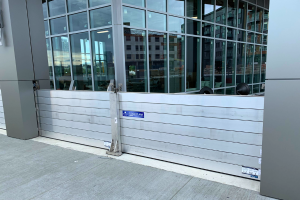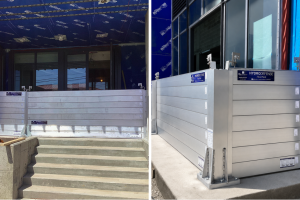

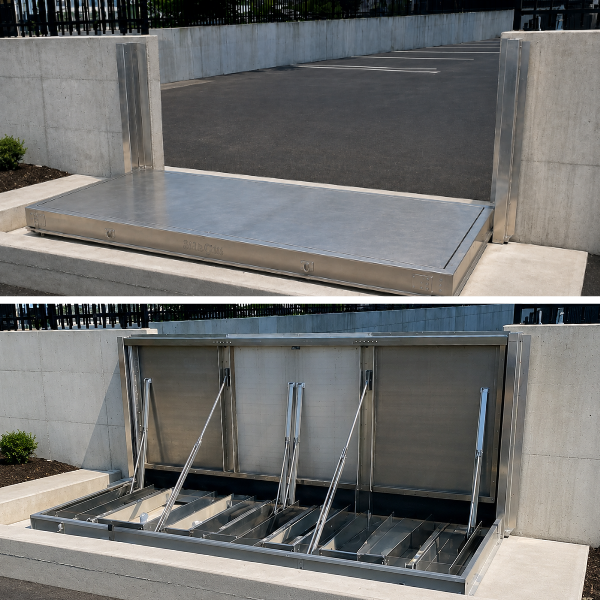
Install unique self-activating flood barriers to automatically lower risk. Self-closing systems utilize hydrostatic pressure from approaching stormwaters for passive deployment. With no required manpower or electricity, these devices leverage facility risks & problems to create a resilient solution.
- Hydrostatic Locking Into The Sealed Position
- No Manual Labor Or Power Needed
- Supports Continuous Protection & Resiliency Goals
- Space Saving & High Aesthetic
- Versatile Industry Applications & Use Cases
- Automatically Raise The Barrier
- Engineered With Heavy-Duty Steel & Aluminum Components
- Protect People And Property 24/7/365
- Designed In Horizontal & Vertical Configurations
As a commercial building owner, install automatic flood barriers to control risks, maximize operational efficiency, strengthen facility resilience, and ensure business success. Read on to learn how self-activating solutions lower risk and prevent damage.
What Is A Self-Activating Flood Barrier?
Before you compare products & options, understand how self-activating barriers will work for your facility. Self-activating systems operate autonomously during coastal storms or flash flooding events. There’s no available personnel, human intervention, or electrical power required to protect your facility. Most solutions use water’s own hydrostatic pressure to reliably deploy during storm conditions. Systems are engineered to protect vulnerable entryways, access points, or vehicular openings behind the device. Passive devices may additionally be located around low-lying stairwells, subterranean parking garages, subterranean infrastructure, and building control systems. With no involvement, you can install products to safeguard unmanned pumping stations, remote service buildings, or full commercial perimeters.
Here’s how automatic floodproofing options work for high-risk commercial sites:
- Eliminate Human-Involved Activation, Demounting, & Post-Storm Storage
- No Electricity Or Power Source Required For Deployment
- Trusted For Constant, Continuous, 24/7 Protection
- Do Not Require Deployment Ahead Of A Storm
- Recessed Systems Minimize Architecture Or Accessibility Impacts
- Fully-Customized For Site & Opening Requirements
Integrating self-closing gates requires careful coordination between design professionals, engineering firms, contractors, and facility managers. Orange Flood Control, LLC is available to help your team measure risk, compare options, and integrate the appropriate self-deploying technologies.
Self-Activating Flood Barrier Cost
Carefully assess & calculate self-activating flood barrier cost. Exact project costs are based on your structure’s risk tolerance, number/size of openings, and site complexity. Compare self-closing product costs against lift-out, swing-hinged, and sliding/rolling floodgate options. To maintain compliance, determine requirements to align local permitting standards & nationwide ordinances. Additionally, factor in the cost for long-term preparation, including compliance water testing, customized repairs, and personnel training.
To realistically measure ROI, factor in the potential cost of post-storm recovery actions. Commercial damage restoration often requires professional clean-up, mold remediation, equipment/inventory replacement, or structural repairs. According to figures from the Federal Emergency Management Agency (FEMA) & National Flood Insurance Program (NFIP), one-inch of water can cost over $25,000 in potential damage. Three-foot water heights can cost your facility over $185,000 to fully repair. These estimated total savings make dedicated protection a cost-efficient option, especially for properties that require uninterrupted, around-the-clock operations. Before your project begins, our lifecycle flood protection team provides a detailed quote highlighting services from consulting to long-term training and repairs.

How Do Self-Closing Flip-Up Designs Work?
To make the right decision, determine how flip-up or float-up design options work. Flip-up systems are installed directly at the vulnerable opening location. Day-to-day, systems sit flush, flat, and recessed in the underground housing & basin assembly. During floods, float-activated deployment arms automatically trigger the gate to flip into position. Compared to manual options, these eliminate the pre-storm planning, response, and verification requirements on your team.
| Responsibility | Manual Systems | Self-Closing Gates |
| Pre-Storm Deployment | Needed | Not Required |
| Transport Components | Needed | Not Required |
| Deployment Team | Needed | Not Required |
| Tools & Hardware | Needed | Not Required |
| Removal & Retraction | Needed | Not Required |
| Post-Storm Storage | Needed | Not Required |
Reduce dependence on emergency staff, continuous monitoring, and pre/post-storm preparation with automatic flip-up barriers.
Enable 24/7/365 Flood Protection
Enable uninterrupted, 24/7/365 protection with passive barrier solutions. Self-raising solutions are designed for instant deployment in any natural disaster – even during unscheduled closures or power outages. These devices require no emergency response planning, warning systems, or pre-storm preparation to deliver full protection. After the storm, systems are stored & concealed underground at the point-of-use – ready to protect against future risks. With 24/7 protection capabilities, these products are the most dependable & cost-effective option for critical commercial facilities:
- Commercial Office Buildings
- Fortune 500 Business Headquarters
- Regional & International Airports
- Grocery & Retail Stores
- Shopping Malls & Centers
- Restaurants & Hospitality Businesses
- Hospitals, Medical & Surgical Centers
- Pump Stations & WWTPs
- Underground & Multi-Level Parking Garages
- Urban & Waterfront Facilities
- Car Dealerships & Service Centers
Automatic gate barriers enable always-in-place protection – with no emergency response plans, warning systems, or alarms.
Minimize Operational Interruptions With Self-Closing Flood Gates (SCFB)
Automatic flood gates minimize operational disruptions – enabling uninterrupted productivity, profitability, and protection. Protect your employees, equipment, inventory, and investments around-the-clock. Automatic deployment options empower facilities to remain operational until the last possible moment. Heavy-duty, marine-grade, and highly-durable construction components ensure resilient defense before, during, and after the storm.
How SCFBs are designed to protect & minimize disruptions:
- Remains Nearly Invisible In The Resting Position
- Designed For Driveways & Vulnerable Building Openings
- Barrier Stores Flush In Underground Basin
- More Reliable Than Traditional Sandbag Methods
- Safeguard Operations With Automatic Gates And Barriers
When storm notice is issued, no labor-intensive, time-consuming, manual-deployment operations are required. This way, your team can remain objective and focused on top-priority tasks – eliminating active methods which are vulnerable to human-committed errors. Choose commercial mitigation systems to keep your facility open & operational.
Eliminate Required Human Intervention
Self-activating systems reduce risks without human intervention or electricity. Unavailable employees or power failures are notable causes for avoidable storm damage. Automatic solutions are optimal for entryway, parking lot, vent shaft, or full perimeter protection at unmanned sites or facilities. Mitigate risks permanently – without constantly relying on people or power. Self-deploying products remain a recommended option for waterfront, shoreline, and urban facilities across the United States.
Minimize risks for your team, inventory, equipment, and assets – whether your personnel is available or not. Automatic flood gates stand out for passively-activated protection – with zero human intervention, manpower, or electricity required.
Support Versatile Design Configurations
The best flood protection devices with self-engaging capabilities support versatile & highly-customizable design configurations. These solutions seamlessly integrate into unique architecture designs, building openings, and vulnerability points. This level of customization is ideal for coastal, underground, waterfront, railway, and unmanned site defense. Architect-led flood mitigation companies can help you make informed design choices to preserve high-end aesthetics. When not in-use, devices reside underground – nearly invisible & undetectable. Maintain, preserve, and elevate facility aesthetics with self-closing barriers.
Require Minimal Annual Maintenance
There’s minimal annual maintenance requirements to keep your flip-up barrier system reliable, durable, and resilient. These products are designed, manufactured, and engineered for high-durability. With many vendors, components are tested for reliable operation & performance for 25+ years. Professional flood protection companies offer client-customized annual & semi-annual contracts that include:
- Comprehensive Device Inspections
- Functional Device Testing
- Servicing, Cleaning, & Repairs
- Responsive Support
- System Diagnostics
- Deployment Methodology Assistance
- Reliable Field Service
Before you install resilient flood doors, gates, planks, or walls – speak with mitigation technicians about maintenance & performance needs.
Preserve Aesthetics & Operations
Passively-deployed systems are designed, fabricated, and manufactured to preserve building architecture. Autonomous operation, minimal footprint, and underground concealed storage is ideal for properties with high aesthetic considerations. Here, design presence cannot be compromised with a permanent barrier. To maximize aesthetics & preserve architectural integrity, prioritize specialized flood mitigation design solutions pre-installation. This way, you can choose innovative solutions for riverside, coastal, urban, or commercial building defense. Integrate automated barriers that preserve facility appearances & aesthetics.
Scale For Full Perimeter Protection
Self operating devices scale for full perimeter protection. Automatic systems are the preferred choice to secure large-scale, critical access points at major infrastructure projects & sites. Passive deployment enables precise, 24/7/365 protection – without compromising resilience, accessibility, or compliance. Even at massive scale, devices can be custom-engineered for fully-automatic watertight protection. Perimeter barriers are regularly deployed to secure:
- Critical Entrance Routes
- Building Parking Logs
- Industrial Warehouses & Loading Docks
- Waterfront & Coastal Properties
- Public Transit Networks & Railways
- Extended Ramps & Stairwells
Maximize protection height & length capabilities with self-acting or rolling flood gates.
Reduce Storage Requirements
Self-storing barriers eliminate interruptions and enable continuous resilience. When not in-use, devices are nearly-invisible – self-storing underground in a concealed trench. There’s no remote, off-site storage requirements – which can slow down emergency response. Plus, transporting components & hardware makes annual repairs and flood testing services more complicated. These point-of-use, automatic capabilities reduce operational costs and space constraints. The best flood mitigation barriers eliminate time & space-consuming storage requirements.
Designed For Versatile Commercial Applications
Resilient self-rising gates are built for versatile commercial use cases. There are a range of applications to protect your property, development, or community with watertight protection. In addition to hydrostatic/hydrodynamic defense, these systems can be installed for:
- Critical Infrastructure Defense
- Construction Storm Protection
- Automatic Spill Containment
- Existing System Reinforcement
- Coastline, Riverside, & Waterfront Protection
Before installing systems, mitigation technicians conduct an on-site visit to pinpoint vulnerabilities and collect field measurements. Then, you can integrate solutions designed for your building codes, requirements, and risk tolerance. Integrate FEMA approved barriers – engineered for unique commercial applications.
Remain Always-In-Place 24/7
For uninterrupted protection & defense – water-activated devices remain always-in-place. Enable a passive response to urban, flash, river, and coastal flooding. These capabilities support 24/7/365 response – without electricity, power, or human intervention. When flooding occurs, devices self-raise and create a watertight seal. For added peace of mind, systems are inspected against ANSI/FM Approvals and H-20-44 loading standards. Before flood barrier system installation, integrate systems for always-in-place defense.
How To Install Self-Rising Flood Barriers For Commercial Sites
Determine how to install self-rising systems for watertight commercial protection. These innovative solutions are expert designed, engineered, and manufactured for dependable always-in-place protection. Facilities in nearly every commercial industry & sector have integrated these devices for uninterrupted, effective defense. As a building owner yourself, protect your property & personnel from unexpected storm emergencies. Read on to learn about installing self-closing flood mitigation solutions.
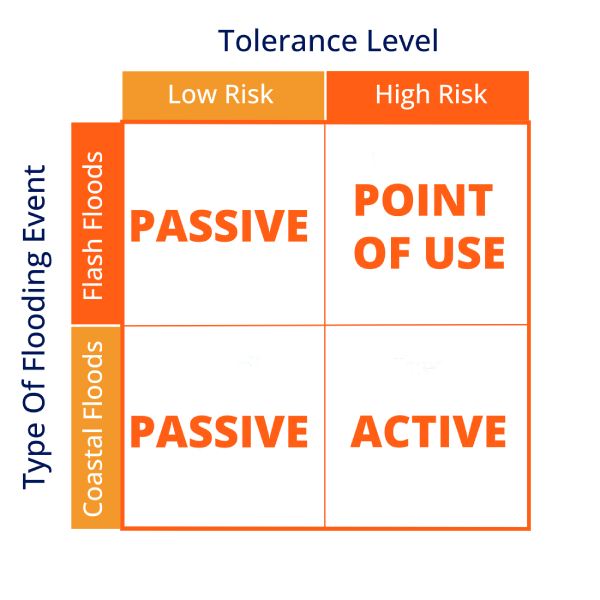
Compare Passive vs Active Methods
First & foremost, carefully compare self-closing systems vs active alternatives. In some cases, manual devices may be a cost-efficient option for certain commercial facilities. Of course, your building may still face storm risks – especially if personnel isn’t available 24/7/365. These systems are reliant on trained, educated, and available personnel for resilient deployment.
For facilities with a high risk tolerance, there are a number of manually-deployed, active options to consider:
Carefully compare active devices & sandbags vs barriers that deploy without human involvement.
Design A Custom System With Licensed Architects
Now, you are ready to design a custom flood control system with certified architects. Expert design teams start with an on-site assessment to collect field measurements & identify vulnerabilities. This initial visit helps technicians & architects understand resilient design options. Self-closing systems uniquely support a range of configurations – according to your facility’s architecture, openings, and requirements. Angled guide-posts can be integrated to support angles, directional changes, or full-perimeter defense. Prioritize design-oriented flood control services to integrate a reliable, always-in-place system.
Install Gates With Certified Technicians
Once design is complete, it is time to install commercial protection systems with certified technicians. Devices are installed at the point-of-use – where they can reliably self-deploy during real-world storm conditions. Processes are coordinated with FEMA requirements, FM/ANSI 2510 standards, and H-20-44 loading demands. After the end-to-end process is complete, your water diversion wall will remain concealed & flush. This helps commercial facilities eliminate tripping hazards, promote high aesthetics, and maintain ADA accessibility. Now that your vision, requirements, & plans are finalized – you are ready to integrate heavy-duty gates for emergency protection.
Train & Educate Your Team
Following a successful install, prioritize emergency device training for your team. For automatic protection, required training sessions & emergency response planning is kept at a minimum. Of course, teams should be familiar with how to manually deploy devices for periodic testing, servicing, and repairs.
Regardless of your device type or complexity-level, in-depth training sessions emphasize:
- Safety & Preparedness Protocols
- Expert Site & Deployment Coordination
- Strategic Resource Management
- Organized Communication & Delegation
- Hands-On Demonstrations & Training
- Responsive Support & Feedback
Prioritize proactive flood mitigation strategies for training & emergency response.
Prioritize Post-Install Maintenance
Prioritize long-term scheduled maintenance for your industrial flood barriers. This approach ensures your emergency protection gates are performing reliably & operating as intended. Schedule servicing on a yearly, semi-annual basis, or customized basis to remain proactive. Additionally, you may want to coordinate specialize repairs & inspections after a major storm. Flood control maintenance keeps your system performing reliably for long-term protection & defense.
Analyze how self-activating devices lower & control risk. These commercial flood barriers enable 24/7/365, always-in-place protection – without human intervention or power. Keep your facility open & operational with systems that minimize interruptions. Devices support versatile design configurations to seamlessly integrate into facility architecture. Annually, there’s minimal requirements to keep systems reliable & resilient. Follow the points above to learn about self-activating barriers to prevent damage.
Self-Activating Flood Barrier FAQs
What Is The Property’s Flood History & Risk Profile?
If you’re deciding between automatic vs manual flood protection, start with a risk assessment and analysis. Orange Flood Control, LLC provides site-specific assessments to determine your property’s value, advanced storm notice, operating requirements, and staffing levels. Our experienced flood mitigation experts will guide you through the following questions:
- Do you know the number of openings at-risk?
- What type of openings are there – doors, loading docks, ramps?
- Has every opening along the perimeter been documented?
- Has your property ever flooded?
- What type of emergencies do you face – coastal storms, hurricanes, flash/riverine flooding?
- How would you score your building’s overall flood risk?
- Does your facility require uninterrupted operations during installation or maintenance?
- What design flood elevation (DFE) will govern the project?
- What compliance codes & standards do you need to meet? ASCE 24, ANSI/FM 2510, BABA standards, NYC EBC?
- Do you have the required documentation (drawings, measurements, specifications, approvals, & verification records)
Assess historical flooding, risk tolerance, and project requirements to select automatic barriers.
How Do I Get & Install Self-Closing Barriers?
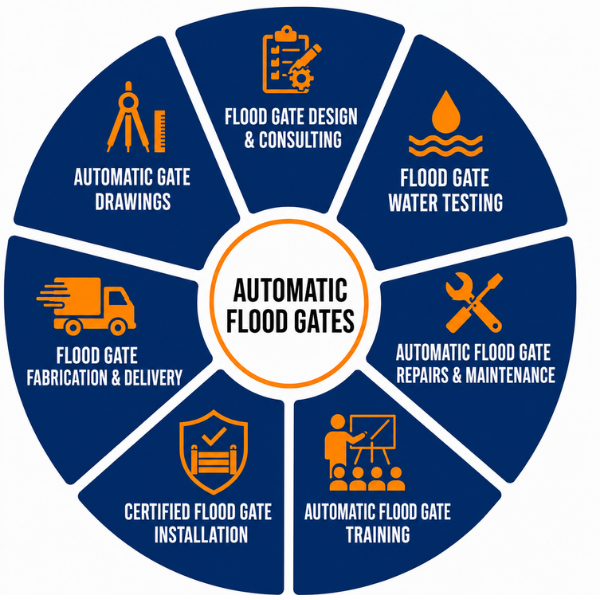
Installing automatic, always-ready products requires careful coordination between project owners, architects, general contractors, and project stakeholders. Contact Orange Flood Control, LLC to request detailed device resources, cut sheets, and case studies. Then, schedule an on-site to compare options for facilities that require 24/7, uninterrupted operations. Once your contract is signed, our solution-driven team handles the full-lifecycle project through planning, protection, and long-term preparation:
- Planning: Design resilient self-closing systems with in-house project management, architectural support, and documentation coordination. Access project-specific solutions to align protection with FEMA dry floodproofing standards and ANSI/FM 2510 Approvals requirements.
- Protection: Select quality device options from established and certified manufacturers. We handle end-to-end certified execution to keep field & office operations synchronized throughout installation.
- Preparation: Long-term ensure your system remains tested, maintained, and repaired for uninterrupted readiness. Regularly retrain your team with comprehensive presentations, step-by-step instructions, and custom deployment videos.
Contact our team for full-lifecycle project support and ongoing expertise.
How Do You Test Automatic Devices?
Before real-world deployment, our team offers compliance water testing post-installation. In-house, union-certified technicians perform chalk tests to validate watertight seal/gasket alignment. Then, a cofferdam enclosure is constructed for simulated field hydrostatic water testing. During annual maintenance, our specialists perform light & fit tests to check reliability. Across inspections, we document performance & validate code/compliance standards. For self-closing systems, our inspection checklist covers:
- Watertight Gaskets & Compression Seals
- Caulking & Grouting
- Screws, Washers, & Bolting Hardware
- Equipment Labeling & Asset Tags
- Corrosion, Rust, & Surface Coatings
- Storage Container & Apron Components
Contact our flood mitigation team for resources on compliance water testing & ongoing device inspection support.