Develop a resiliency focused flood mitigation plan for Boston coastal buildings and properties. Expert planning defends waterfront businesses & neighborhoods from storm surges and long-term sea level rise. Business owners and CEOs across the city are implementing dedicated resiliency projects focused on reducing risk & strengthening ongoing efforts.
At the city level, Boston is taking several steps for coastal resilience planning:
- $10B Coastal Storm Risk Management Plan (CSRM): Coordinated with the US Army Corps of Engineers (USACE) to safeguard vulnerable areas and neighborhoods.
- Zoning Rules: New stringent standards for projects in the Coastal Flood Resilience Overlay District (CFROD) & other high-risk zones.
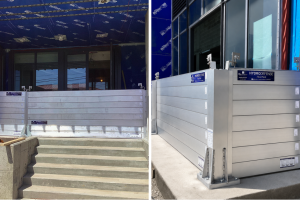
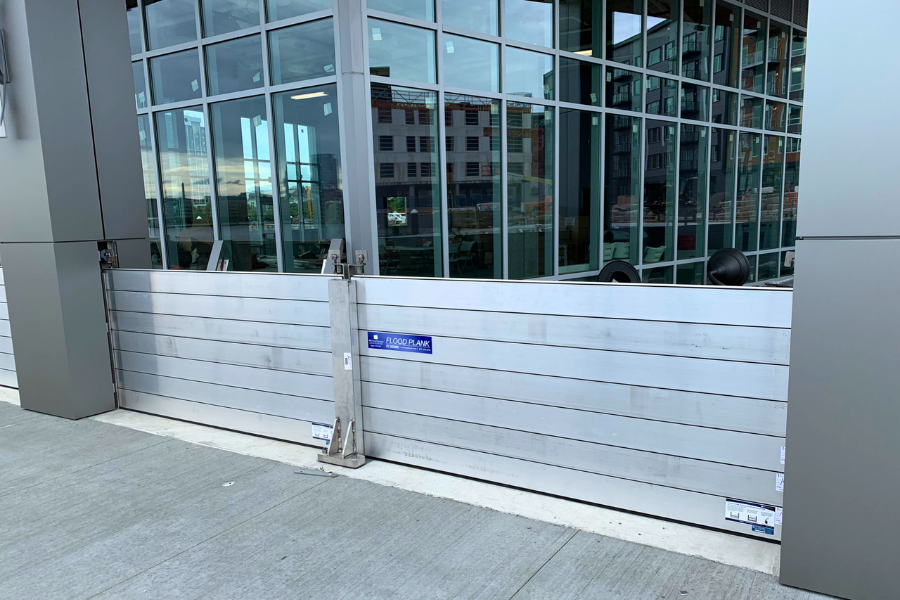
- Property-Level Strategies: Building owners continue to adopt strategies with deployable barriers, durable floodwalls, and watertight systems.
If your business is located in one of the city’s coastal neighborhoods – including Dorchester, Downtown, East/South Boston, North End, or Charleston – make protection a high-priority. Take action to protect your infrastructure, team, and company’s future. Read on to learn about commercial & coastal building flood mitigation in Boston Massachusetts.
Establish Flood Protection Goals & Objectives
Establish clear flood protection goals and objectives for your coastal property. Your plan should outline immediate & long-term measures to mitigate flood risk. Experienced companies assess current conditions, existing strategies, and overall risk tolerance. Together, you can develop clear objectives for construction costs, stakeholder engagement, and design guidelines. Financially, you can clarify needs for funding sources and state/federal grants approvals.
Your resilience & operational goals may include:
- Operational Continuity: Create a cohesive, long-term strategy that preserves uptime & accessibility.
- Expert Guidance & Support: Develop a site-specific plan to address urgent and long-term coastal vulnerabilities.
- Resilient Design: Protect unique aesthetics, architecture, & character – ideal for sites in Little Mystic Channel or Navy Yard.
- Long-Term Protection: Support long-term protection, efficiency, and sustainability.
- Enhanced Experiences: Enrich, protect, and preserve community or recreational spaces.
Determine goals to protect coastal & waterfront properties around Charlestown Navy Yard, Seaport District, Boston Harbor.
Develop A Hazard Mitigation Plan
Work with flood control companies and specialists to develop a site-specific plan. Building a National Hazard Mitigation Plan (NHMP) requires careful coordination with city officials, engineers, architects, and contractors. Review initial goals, then develop targeted strategies to mitigate damage during natural hazard events & storms. Create plans to protect critical infrastructure, operations, and personnel. Your strategy should pinpoint exact areas that require reliable protection. Ensure your approach integrates economic, environmental, and social risks to support comprehensive planning. With this model, you can implement a community-level plan to enable uninterrupted operations and protect public health/safety.
Here’s a summary for your NHMP:
- Address Key Hazards: Focus on riverine/coastal flooding, sea level rise, hurricanes, and winter storms.
- Clarify Core Goals: Protect public safety, promote continuity, and maintain FEMA eligibility.
- Coordinate The Planning Process: Align on risk tolerance, stakeholder engagement, and annual maintenance.
Keep critical stakeholders prepared for short-term vulnerabilities & long-term climate change risks. Address concerns, allocate resources, and clarify full scope/extent. These initial steps help you establish a clear path to flood protection, protecting against damage, losses, or long-term restoration costs. Collaborate with professional flood protection businesses, emergency management teams, and the City of Boston to develop a coastal hazard protection plan.
Coordinate City, State, & Federal Compliance Requirements
Before you finalize requirements, carefully coordinate city, state, and nationwide compliance standards. Select barriers that check the necessary boxes for approvals, insurance eligibility, and local floodplain regulations. These steps are critical for projects with the Massachusetts Port Authority (Massport), Logan Airport, and critical ports. Additionally, decision-makers should invest in specialized protection for tourism & entertainment properties like the Boston Aquarium, Museum of Science, TD Garden, & Fenway Park.
Prioritize emergency plan alignment & regulatory compliance alignment, without sacrificing day-to-day operations.
Create a strategy, plan, & solution to address stringent Massachusetts & US requirements:
- Regulatory Compliance: Integrate solutions that are compliant with FEMA, ASCE 24, & NFIP dry floodproofing guidelines for commercial-use, non-residential structures.
- Engineering Standards: Select products that meet ANSI/FM 2510 approvals for abatement equipment. Prioritize options with the platinum-level certifications and independent third-party verification.
- National Flood Insurance Program: Standards for federal flood insurance, community adoption, and floodplain management practices.
- Coastal Flood Resilience Overlay District (CFROD): Special requirements for new construction or major retrofits for sites with one-percent chance of flooding.
- Freeboard Requirements: Critical infrastructure projects need to be constructed two-feet over base flood elevation (BFE), and one-foot for non-critical developments.
- Use Limitations: Applications for buildings below design flood elevation (DFE) may be limited to access, storage, or parking.
- Massachusetts Flood Hazard Management Program (FHMP): Technical assistance program for guidance on risk awareness, resistant construction, & floodplain mapping/management.
Coordinate your Boston flood control project from a compliance-driven, risk-focused perspective.
Integrate Self-Activating Resiliency Solutions & Flood Barriers
Now, you are ready to integrate innovative, self-activating, and always-ready resiliency solutions. Install systems that activate & deploy automatically during severe weather events. Physical barriers are passively raised by floodwater’s own hydrostatic pressure, requiring minimal human intervention or electrical power. This level of defense enables 24/7/365 continuity, regardless of advanced storm notice or available personnel. In addition to self-closing capabilities, these products stand out for reliable service lifespan in harsh conditions & coastal/marine environments. This ensures your system is designed for rust/corrosion resistance, reusability, and uninterrupted peace of mind.
Compare hydrodynamic & automatic barrier options:
- Flip-Up Flood Gates: Trusted for underground parking garages, low-lying business spaces, & public transportation networks.
- Self-Closing Perimeter Walls: Integrated around full perimeters and high-risk flood pathways.
Install self-activating solutions to reduce coastal & flash flooding risks in South Boston.
Implement Long-Term, Full-Lifecycle Protection Strategies
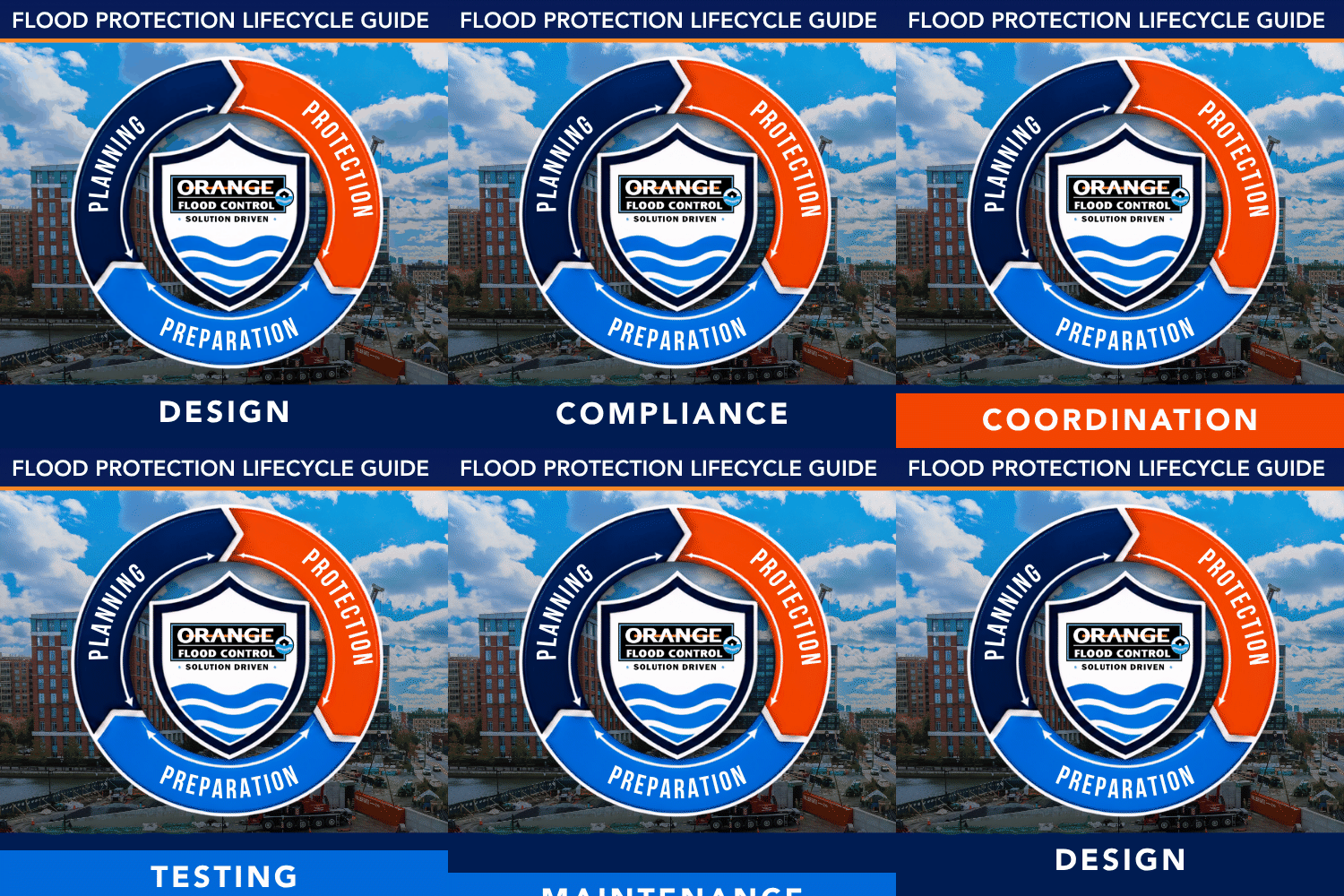
Implement long-term coastal development & resiliency strategies for full-lifecycle flood protection. Your plan should act as a long-term roadmap to defend your critical equipment, assets, infrastructure, and people. Include detailed cost forecasts, funding sources, and project phasing sequences. Additionally, professional resiliency management companies clarify recommended vendor partnerships & long-term maintenance requirements. Long-term requirements may include infrastructure upgrades, annual inspections, and ongoing vulnerability analyses. Special considerations are taken for mixed-use housing developments, retail stores, public spaces, and commercial businesses with unique operational requirements. Execute customized implementation plans to defend your Massachusetts infrastructure short & long-term.