
What Is A Flood Control System?
Determine what a flood control system actually is – focusing on costs, types, & options. Specialized systems encompass a range of devices built to protect people, mitigate property damage, and prevent environmental/public health impacts. These strategies are used to address local storm conditions, heavy precipitation rates, and urban development risks. As a building owner, your full protection system may include structural measures, physical barriers, and advanced early warning solutions. To integrate products with confidence, collaborate with experienced mitigation companies to address risk, streamline construction, and plan for long-term resilience.
Here’s a summary to keep in-mind for your first consultation:
- Structural Flood Management: Reduce risks, minimize impacts, and support continuity with physical devices. Compare barriers, perimeter protection, temporary options.
- Non-Structural Flood Mitigation: Integrate warning/monitoring systems, review flood insurance, and strengthen forecasting. Start with a vulnerability assessment, mapping/modeling consultation, and stakeholder engagement session.
- Causes Of Flooding: Identify risks related to runoff, prescription, or slow absorption. Of course, vulnerabilities differ for urban cities, rural communities, and coastal areas.
- Purposes Of Mitigation: Explore strategies focused on reducing impact, protecting infrastructure, and defending citywide assets. Additional flood control project goals emphasize climate change adaptation and future resilience.
- Notable Examples: Following historic storms like Hurricane Katrina (2005) and Sandy (2012), major steps have been taken in Lower Manhattan & the New Orleans Metropolitan Area.
Keep reading for insights on selecting, installing, & maintaining flood control systems.
How Flood Control Systems Work
Before installation is scheduled, you should fully understand how floodproofing systems work. Flood control devices create a reliable & watertight physical barrier that supports emergency readiness, safety risk reduction, and building damage prevention. This level of defense is engineered to slow down, stop, or restrict surging stormwater during severe weather events. There’s a range of recommended systems to evaluate, including gates, planks, walls, and temporary panels. Depending on your property’s requirements, permanent, self-activating, and removable systems are available.
Trusted for uninterrupted operations, secure building entrances, and underground/subterranean spaces, compare key mechanisms:
- Block: Walls & gates trusted for durable, long-lasting defense.
- Redirect: Move flowing water to safer locations & areas.
- Absorb/Contain: Automatic, water-activated devices – engineered for self-deploying, rapid response.
To strengthen effectiveness, prioritize options with modern designs, durable materials, and smart engineering practices. Analyze how storm control systems work & operate to make an informed decision.
Compliance Certifications: ANSI/FM 2510 & Dry Floodproofing
Select compliant flood mitigation systems that align with local & nationwide certifications. For new & existing U.S. construction, your project will likely go through the ANSI/FM 2510 approvals process. Ensure your selected devices comply with the National Flood Barrier Testing & Certification Program, developed by FM Approvals, Association of State Floodplain Managers (ASFM), and the US Army Corps of Engineers (USACE).
Here’s what’s tested through FM Global & Approvals:
- Individual Materials, Hardware, & Components
- Simulated Condition Performance (Wave Loading, Debris Impacts, Hydrostatic Pressure)
- Salt Spray Corrosion Resistance
- Rubber Tensile Strength
- Annual Maintenance Verification
- Factory Quality Control (QC) & Production Processes
The ANSI/FM 2510 abatement equipment certification is recognized globally. Of course, for projects in the United Kingdom or with British companies, ensure protection compliance with BS 851188 requirements for storm resistant products. Evaluate certifications & standards for dry floodproofing standards and equipment.
Know Your Flood Risk: FEMA Flood Maps & Zones
To select the right device options, address your FEMA zone, local flood map, and site-specific risk tolerance. Collaborate with mitigation specialists to review Flood Insurance Rate Maps (FIRMs), compare local high-risk zones, and determine best practices. Take dedicated steps whether your property is in an X, AE, A, V, or special flood hazard area (SFHA).
Throughout vulnerability assessments & early design consultations, specialists review a range of factors:
- 500 & 100-Year Floodplain
- Base Flood Elevation (BFE)
- Design Flood Elevation (DFE)
- Floodplain Boundary
- Insurance Risk Zone Designations
Local maps are updated frequently to reflect current meteorological, hydraulic, and hydrologic conditions. You should regularly review your strategy to stay updated with current climate, environmental, and urbanization concerns. Understand your property’s individual storm risk, tolerance, and recommended steps.
What Flood Control Systems Cost
Determine what flood control systems cost on average, as well as based on your unique requirements. Since protection is tailored, customized, and fully-integrated, approximate protection costs can vary widely. You should familiarize yourself with cost-driving factors and general ranges by industry type.
Prior to requesting a quote, evaluate the factors that drive barrier system costs:
- Number Of Openings: Individual vehicular/pedestrian entrances, loading docks, doorways, and garages increase your total cost.
- Site Requirements & Complexity: Additional steps for locations with tight access, unique architecture/aesthetics, or advanced coordination.
- Exact Opening Size: Larger areas may require customized protection, additional material, and certified engineering practices.
- Type Of System: Costs differ for sliding/swing gates, passive/automatic systems, watertight doors, and removable planks.
- Water Protection Heights: Products are certified for site-specific water protection heights. This ultimately determines costs related to material, testing, and fabrication.
- Certifications & Compliance: Expect additional costs to align FEMA, ANSI/FM 2510, and IBC recognized standards.
- Long-Term Maintenance: Expenses tied to watertight seal/gasket replacement, annual inspections, and periodic refresher training.
While reviewing average costs, factor in your solution’s forecasted ROI. In direct damage alone, FEMA reports that a single inch of floodwater can cost $25,000 in repairs & restoration.
Speak with U.S. flood control companies about system costs, installation expenses, and long-term maintenance requirements.
Does Flood Protection Pay Off? Mitigation ROI vs. Cost Of Flooding
To make an informed decision, get clear about what your actual mitigation ROI looks like. According to recent studies from Pew Charitable Trusts (Pew) & the National Institute of Building Sciences (NIBS), every $1 invested in hazard mitigation can save approximately $6. Your investment can reduce damage, save lives, and protect jobs/reputation. For riverine flooding specifically, FEMA, HUD, & EDA records found a $7-to-$1 savings benefit. Additionally, you can forecast a $4-to-$1 ROI if your project stays compliant with 2015 International Code Council (ICC) model building codes. These code-plus flood control efforts may involve additional structural techniques & ongoing maintenance practices.
Beyond simply reducing damage, these strategies provide a range of benefits & impacts:
- Lower Insurance Premiums
- Accelerated Business & Community Recovery
- Job & Business Stability
- Ongoing Public & Environmental Health
- Immediate, Always-Ready Protection Options
Once you’re ready to start flood control construction, think about your return on investment (ROI) – compared to the cost of storm damage.
Flood Risk Mitigation & Flood Control Measures
Prioritize proactive measures when integrating flood protection systems & solutions to prevent heavy rainfall, storm surges, runoff, coastal hurricanes, or flash flood events. Compared to the traditional dams & sandbags, permanent flood walls provide reliable, resilient protection against flood damage. Communities are investing in large-scale flood control infrastructure projects that protect citywide transportation networks, multi-family communities, and local business districts.
- Contain Rising Flood Water
- Address Long-Term Climate Change & Erosion Risks
- Deliver Financial Savings
- Customized To Building Water Levels
- Designed For Critical Infrastructure Like WWTPs & Levees
- Automatic Drainage Post-Storm
The best resiliency management firms contain rising floodwater with innovative techniques & measures.

Types Of Flood Control and Protection Systems
Install the best flood control systems for reliable protection. Rising sea levels & severe storm events threaten vulnerable infrastructure across the United States. These unpredictable & uncontrollable disasters place commercial businesses, life-saving hospitals, schools, communities, and critical infrastructure at-risk. As a building owner, emergency preparedness & storm safety are top priorities. Professional flood control services can help you install resilient systems that defend your most valuable assets, equipment, infrastructure, and personnel. Read on to learn about the best flood control systems for dependable mitigation, prevention, and protection.
Automatic & Passive Flood Prevention Systems
Automatically protect your facility 24/7/365 with the best passive flood barrier solutions. How do automatic flood mitigation systems work? Self-rising, self-closing, automatic options leverage water’s own hydrostatic pressure to reliable defend infrastructure, assets, and equipment – without human intervention, batteries, or electricity. These systems eliminate time-consuming deployment requirements & pre-storm preparation – reducing flood risk to your team, assets, equipment, and building. Engineered for durability & long life-span, these devices are designed to protect vulnerable structures for years. Reliably safeguard infrastructure with self-activated automatic flood barrier systems.
Active, Rapid Response Flood Barrier Systems
If your facility has the available space, personnel, and power – active flood barrier systems are a reliable alternative to consider. These products are ideal for facilities with available personnel, high risk tolerance, and advanced storm notice. Rapid response flood systems are designed for quick deployment by minimal employees. Once devices are fully-deployed, durable systems protect doorways, garages, loading docks, and full building perimeters. For resources and support throughout the process, prioritize turnkey resiliency management & flood control services. Across the United States, manual systems are used to protect hospitals, corporations, government facilities, schools, communities, critical infrastructure, and retail locations. Overall, active barriers are reliable, durable, reusable, and resilient against a diverse range of flooding situations. Install a rapid response & deployment system if your facility has the required personnel.
Point-Of-Use Solutions
Keep your facility open & operational until the last-possible-moment with point-of-use gates, doors, windows, and devices. Solutions like watertight, fire-rated doors are stored at the vulnerability point or location. These solutions keep barriers, deployment hardware, and other necessary components easily-accessible on-site – at the point-of-deployment. Last-minute deployment capabilities minimize downtime, accelerate shutdowns, and resume operations faster. Financially, these systems reduce additional installation & fabrication expenses for storage. Work with flood control companies that prioritize durable construction, precision engineered solutions, and clear communication end-to-end. Access convenient, easily-accessible, and always-available protection with point-of-use device options.
Removable Flood Control Solutions
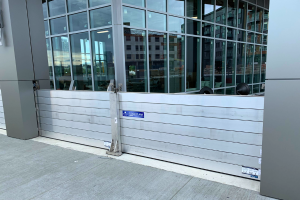
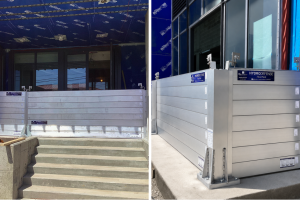
Balance resilient protection & facility aesthetics with fully-removable, demountable products. When not in-use, there’s limited visible evidence of a flood device. Once flooding conditions are imminent, systems are quickly deployed to defend against damage. Flood planks are one of the most trusted, recognized, flexible, and cost-efficient demountable system option. These solutions use stackable aluminum stop logs for resistance against hydrostatic pressure, wave impact loads, and debris. Protect your facility and maintain architectural aesthetics with removable planks and demountable mitigation systems.
Custom Flood Protection Solutions
For facilities with unique openings, protection goals, or operational requirements – consider fully-customized solutions. Your custom protection & prevention system may include automatic gates, doors, planks, glass, or vent shaft barriers. Defend your facility with specialized barriers – fabricated to your specific location, property, or vulnerable opening. Solution-driven mitigation professionals have customized devices to protect properties across the United States – including commercial buildings, multi-family developments, life-saving hospitals, schools & universities, and critical infrastructure sites. Address unique goals, align risk tolerance, and ensure resilient performance with custom systems.
Install resilient flood control devices for advanced storm protection & prevention. For 24/7/365, always-in-place defense – consider automatic barriers. If your facility has the available manpower – active & manual flood mitigation systems support a rapid emergency response. Similarly, removable flood devices balance resilient protection with seamless aesthetics integration. Of course, custom device options are available for buildings with unique openings, operational requirements, or design goals. Follow the points above to learn about the best control systems for prevention.