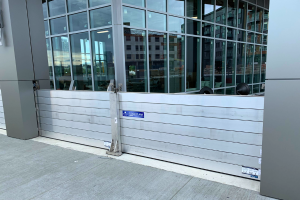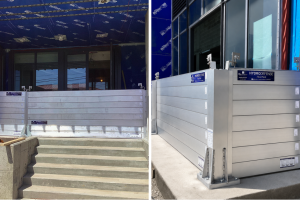
Review end-to-end flood barrier installation processes for commercial buildings. Resilient barriers are permanently installed to create a watertight seal, deliver long-term protection, and minimize damage risks. Specialized installation companies prioritize seamless precision from start-to-finish – verifying that devices fit & operate properly. As a building owner yourself, install commercial flood mitigation systems to secure your critical entrances, doorways, garages, and other high-traffic spaces. Read on to learn about flood barrier installation processes for commercial & critical infrastructure sites.
Expert, Architect-Led Consultation
Begin flood device installation with an expert, architect-led consultation. Speak with mitigation experts about your facility’s risk tolerance, design requirements, and required applications. Depending on your needs, the type of protection or barrier may vary significantly. If your commercial environment requires uninterrupted, around-the-clock operations – ask about automatic barrier solutions. These systems are always-in-place for 24/7/365 protection – without human intervention or electrical power.
Here’s what the end-to-end process involves:
- Review your property’s flood risk and history of local flood events
- Confirm the expected flood depth and duration at the building line
- Check local flood warning lead time against realistic deployment windows
- Reference FEMA Technical Bulletin 3 for non-residential dry floodproofing
- Involve a professional engineer for certification and load calculations
- Identify back water and drain backflow risks below the barrier line
- Note where floodwaters have previously entered the building
- Confirm which flood protection products are suitable for the structure
- Plan coverage for docks, ramps, and vehicles access points
- Compare demountable barriers, storm shutters, and automatic self-activating systems
Before you install self-activating flood barriers, schedule a comprehensive consultation with licensed & certified architects.
Initial Field Visit & Site Measurements
After a comprehensive discussion, flood mitigation companies will perform an initial field visit to verify conditions & collect measurements. Technicians review vulnerable doorways, garages, interior hallways, windows, perimeters, and other at-risk points. Foundations, groundwork, and other structural components will be inspected as well. Exact measurements ensure that barriers are precisely fabricated & fitted for a seamless install. This quick visit can have a significant impact on end-to-end lifecycle flood mitigation costs – while ensuring dependable & resilient protection.
Specialized companies conduct in-depth measurements across your entire perimeter:
- Measure every door frame at the head, middle, and threshold
- Record the entire perimeter that requires flood protection
- Identify vents, wells, and other openings below the design flood line
- Check whether walls are masonry, timber, or clad in wood frames
- Confirm each mounting surface is flat and free of gaps
- Mark anchor position on both jambs before fabrication
- Photograph each opening and file the image with the site record
- Note existing storm shutters, rails, or fixings already in place
- Capture sill height, threshold depth, and finished floor level
- Verify masonry mortar joints are sound enough to hold anchors
Schedule an expert field visit for seamless commercial flood barrier installation.
Coordinated Site Preparation
Commercial flood control companies specialize in coordinated site preparation & management. The process begins by inspecting the install area, removing debris, and cleaning mounting surfaces. This way, barriers can create an unobstructed, tight, and watertight seal once anchored. Mitigation technicians prioritize expert cross-trade collaboration & communication to minimize delays and ensure schedule alignment. This level of coordination is invaluable to eliminate interruptions and enable continuous operational efficiency.
End-to-end pre-installation preparation may involve:
- Clear debris, sand, and silt from the seating area prior to install
- Vacuum dust from drilled holes before anchors are set
- Repair cracked mortar and voids in masonry walls
- Grind uneven surfaces flat so the gasket seats evenly
- Stage tools, fixings, and hardware at each of the openings
- Move vehicles and stored stock clear of the work zone
- Confirm the storage location for panels, posts, and rails
- Set drill depth and mark hole centers on the door frame
- Fill surface gaps and pinholes in the substrate
- Protect finished surfaces and timber trim during install
It’s time to prepare & coordinate for flood protection device installation.
Seamless & Precise Flood Protection Barrier Installation
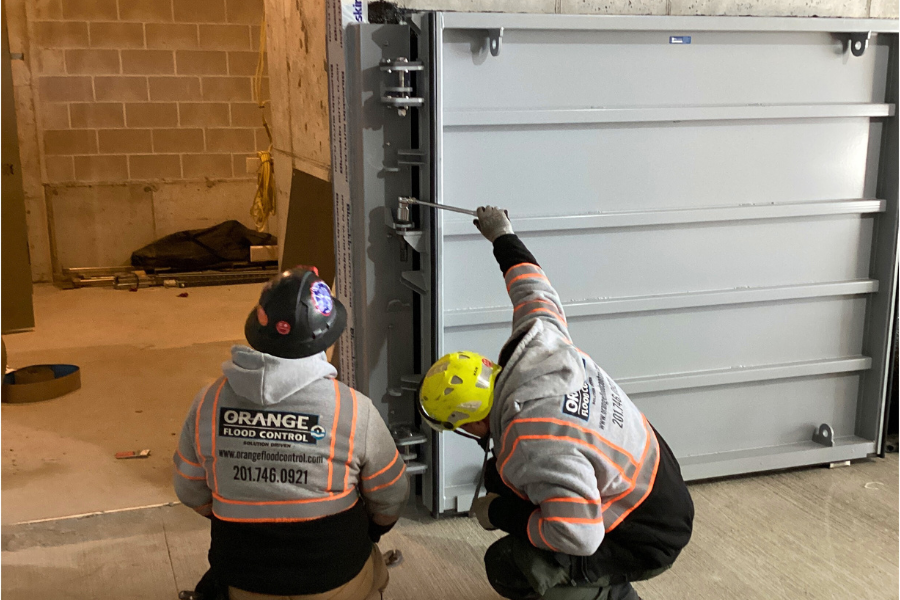
Following coordinated site prep, you are ready to install flood control solutions. With professional flood mitigation services, you can ensure resilient leadership, certified excellence, and attention-to-detail throughout the project. Technicians begin with a final inspection of mounting hardware, structural components, caulking, and watertight gaskets. Once structure & ground surface is confirmed, anchors, center posts, and demountable/permanent components are installed. Construction teams securely mount barriers to brick, cinder-block, and concrete to maximize durability & ensure long-term protection.
Here’s a summary on the end-to-end flood gate installation process:
- Follow the manufacturer’s installation instructions for the barrier model
- Review the installation video before the first panel is fitted
- Drill anchor holes to the specified depth and diameter
- Fix the bottom rail level across the full opening width
- Set each center post in position and check plumb before final torque
- Seat gaskets against a flat, clean surface for a proper seal
- Tighten fasteners in sequence to achieve a tight seal
- Bed anchors in resin or mortar where masonry is soft
- Use suitable fixings for timber, wood frames, and concrete
- Repeat the sequence around the entire perimeter
Collaborate with specialized experts & technicians to install flood control systems.
Flood Barrier Testing For Watertight Seals & Readiness
Once installed, your rapid deployable flood barriers are thoroughly tested against artificial conditions & industry standards. Before emergency deployment, successful field testing ensures confidence & peace of mind. Of course, manufacturer testing is additionally conducted pre-delivery for added safety and reliability. These procedures measure leakage & seepage from hydrostatic pressure. Thorough testing is recommended for a range of protection products – including automatic/passive gates, doors, planks, panels, hatches, and windows.
Here’s how specialists test flood barrier reliability & readiness:
- Test each barrier for water ingress under hydrostatic pressure
- Inspect the proper seal along the base, jambs, and center posts
- Confirm the system will effectively protect the property at design depth
- Check back water and drainage points stay sealed under load
- Note any seepage on the inspection record with a dated image
- Verify the barrier can be deployed inside the flood warning window
- Re-check the tight seal after the first deployment and drying cycle
- Schedule maintenance intervals for gaskets, rails, and fixings
- Confirm storage conditions keep panels flat and undamaged
- Retest doors, windows, and other openings after any building work
Schedule expert-led, evidence-backed testing for your automatic or stackable flood barriers.
Reduce Flood Risk With Professional Barrier Installation
Review end-to-end flood barrier installation requirements, processes, and procedures. While exact specifications require, the approach is similar for a range of devices – including gates, planks, doors, and flexible flood barriers. Get started with an initial consultation & in-person field visit. Expert technicians will explain how they prepare the site & install systems with seamless precision. For added peace of mind, testing & inspection is performed against industry standards. Follow the points above to learn about flood barrier install processes for commercial sites.