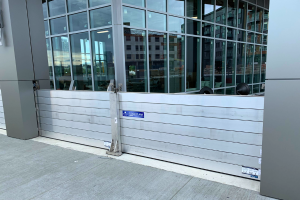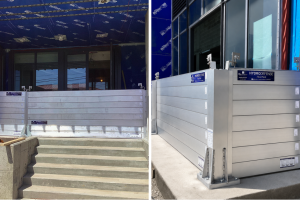
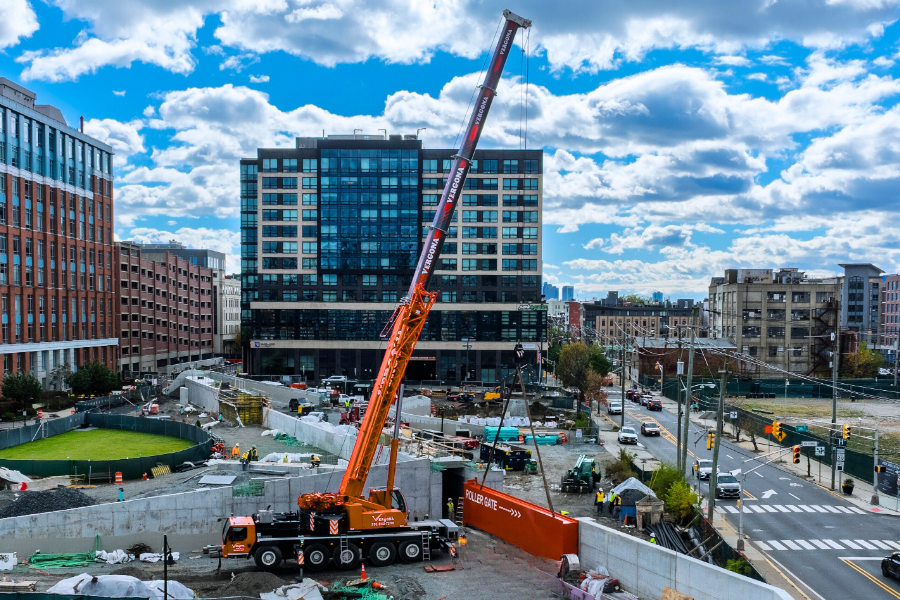
Review the flood gate installation process for existing buildings and new construction. Watertight gates deliver reliable protection across windows, doorways, parking garages, and building entrances/exits. These resilient devices require expert technicians & services to install gate panels, mounting hardware, permanent features, and watertight gaskets. As a building owner or project manager, integrate specialized protection to defend your critical infrastructure site & long-term operations.
Before you start the process, keep these special considerations & requirements in-mind:
- Establish A Site-Specific Emergency Response Plan
- Ensure ANSI/FM 2510, NFIP, FEMA, & ASCE 24-24 Compliance
- Coordinate With Architects, A Professional Engineer, & Flood Insurance Representatives
- Watch Local Flood Warning Alerts & Storm Notices
- Determine Your Site’s Flood Damage & Repair Cost History
- Note Which Openings Are Most Prone To Water Intrusion
- Confirm Your Building Structure & Ground Elevation
- Test For Seepage & Leakage Rates
Read on for the step by step flood gate barrier installation process on new and existing development projects.
Identify At-Risk Openings & Access Points
Before flood barrier installation is scheduled, identify at risk openings, entrances, and access points across your facility. Integrate solutions that quickly or automatically block at-risk openings during emergency flash flooding or heavy rainfall events. Meet with storm risk assessment consultants to review site conditions – then select efficient, customized, tested, and certified product options.
Resilient watertight devices are designed for a range of building use cases & applications:
- Primary Doorways & Entrances
- Front Door, Side Doors, & Standard Doorways
- Ground-Level Door Openings & Potential Entry Points
- Loading Docks, Bays, & Larger Openings
- Perimeter Walls, Side Walls, & Foundation Vents
- Basements, Crawl Spaces, & House Utility Rooms
- Hospital & Healthcare Facilities
- Subterranean Or Multi-Level Parking Garages
- Elevator Cores & Shafts
- Critical Infrastructure Sites & Projects
- Wastewater Treatment Plants (WWTPs)
- Sites With Limited Access Or On-Site Staffing
Compared to traditional sandbags, dedicated gates seal at-risk points with reusable, reliable, and superior flood control. Carefully identify vulnerable openings and access points, to get started with flood protection gate installation.
Compare Automatic vs Active Flood Barrier Options
After an in-depth building assessment, compare active versus automatic flood gates. The right systems depend on your project’s risk level, operating requirements, use case, and building aesthetics. For high-risk sites, choose self-closing devices or flip-up flood barriers that activate automatically during emergency conditions. These products require minimal human intervention or available personnel – allowing your facility to act quickly and maintain operations throughout coastal/flash flooding. Manual devices will require pre-storm placement, deployment, and checks once a storm notice is issued.
Compare resilient, reliable active vs automatic storm barriers to select the right system option:
- Passive Flood Gates & Automatic Barrier Systems
- Sliding Flood Gates & Rolling Flood Gates
- Hinged-Pivot Watertight Gates
- Point-Of-Use Flood Gates
- Floodgates For Doors
- Flex-Gate Barriers
- Door Dam & Removable Door Barrier Panels
- Storm Shutters For Windows & Glass Openings
- Multiple Barriers For Large Or Multi-Entry Sites
- Solid Metal Panels & Water Tight Gasket Seals
- Systems With Backup Power & Manual Override
- Full Range Of Heights, Widths, & Purchase Options
- Cost, Lead Time, & Warranty Comparison
Compare flood control gate options, vendors, designs, and use cases.
Install Flood Protection Gates With Mitigation Experts
At this phase of the process, you are ready to install flood gates with experienced and certified mitigation experts. End-to-end, installing storm surge protection requires specialized tools, materials, labor, experience, and precision. Floodgate companies support a highly-efficient, safe, secure, and coordinated process – defending nationwide commercial properties, multi-family communities, hospitals, schools, and new construction operations.
The step-by-step process involves:
- Coordinate On-Site Delivery
- Confirm Your Local Contractor’s Credentials & Insurance
- Review Site Safety & Crew Access Requirements
- Get Each Opening Cleaned, Leveled, & Prepared
- Level The Ground For A Smooth Surface At Each Threshold
- Setting Mounting Brackets (Internal Or External)
- Anchor Mounting Bolts Into Solid Concrete
- Position & Secure The Gate Panel
- Extend Flood Protection Across Side Walls & Thresholds
- Seal Gaps & Penetrations To Prevent Flooding
- Identify Potential Weak Spots Or Leaks
- Verify Alignment, Sealing, & Team Preparedness
Confidently integrate protection with services that increase peace of mind, performance, and reliability. Install commercial flood gates trusted for existing properties, new construction projects, and critical infrastructure sites.
Inspect Gate & System Components
After precision installation, prioritize flood barrier inspection to validate, gate, system, and hardware components. Technicians take proactive steps to ensure your system is organized & ready-to-deploy – inspected for leaks, damage, or performance issues. The process starts with compliance-driven field inspections – including chalk, hose, and hydrostatic testing. These comprehensive procedures measure leakage rates, watertight seal contact, and real-world conditions.
This proactive approach inspects essential system parts, hardware, & components – including:
- Inventory, Storage, & Labeling
- Mounting Posts & Anchors
- Mounting Bolts, Brackets, & Metal Fasteners
- Caulking Gaps, Cracks, Or Weak Sealing
- Concrete Footings
- Side Walls, Thresholds, & Surrounding Structure
- Water Tight Seal Contact & Leakage Rates
- Hydrodynamic/Hydrostatic Pressure Resistance
- Potential Entry Point Coverage
- Gaps To Be Filled Or Re-Sealed
- Damage, Rust, Or Panel Warping
These inspections minimize delays & strengthen protection once a storm notice is issued – when it matters most. Inspect heavy duty flood gates for performance, reliability, and readiness.
Commit To Flood Gate Maintenance To Ensure Your System Works Long-Term
Post installation, commit to annual site specific flood control device maintenance to protect your investment. High-quality systems are designed with minimal maintenance & upkeep in-mind. Annually, you should maintain & service systems to keep protection reliable across garages, doors, or full building perimeters. Keep your mitigation equipment tested, dependable, and easy-to-activate during emergency conditions.
The expert maintenance process may involve:
- Clean Off Debris, Dirt, & Dust
- Replace Damaged Hardware & Components
- Inspect Potential Leaks
- Verify Watertight Seals & Gaskets
- Check Compression Strips & Hardware
- Test Battery Backup & Power Supply (For Flood Monitoring Equipment)
- Confirm The System Works Before Storm Season
- Run A Deployment Drill After Each Flood Warning
- Store Equipment In A Dry, Covered Location
- Validate Readiness & Long-Lasting Protection
Prioritize annual flood gate maintenance, repairs, and inspections to ensure uninterrupted continuity & peace of mind.