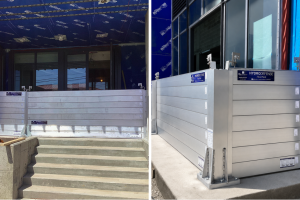
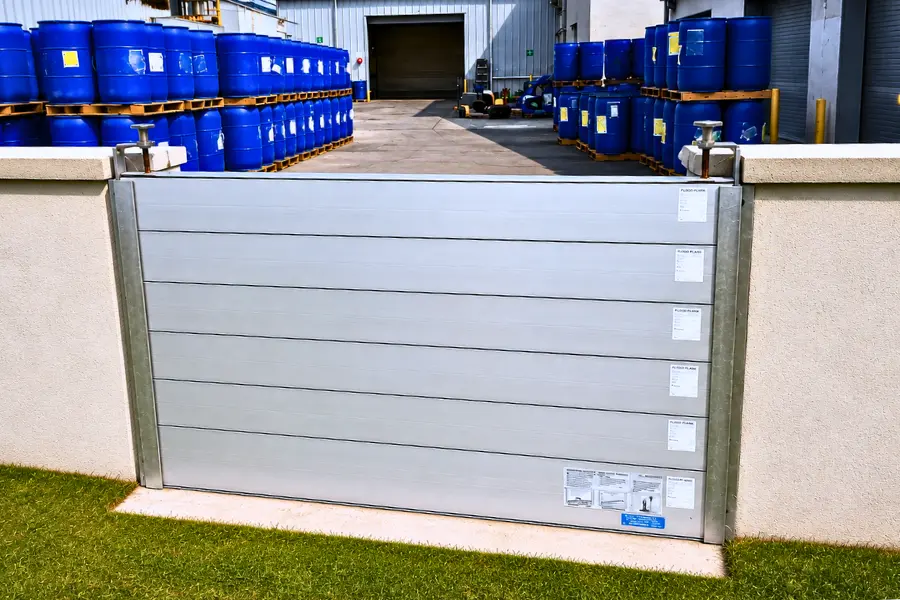
Integrate fully-removable, rapidly-deployable, and easily stackable flood barriers to defend at-risk building openings. Stackable devices remain one of the most cost-effective, lightweight, and durable flood protection options. For most single openings, systems can be deployed by a single person with minimal hardware or tools. Aluminum stoplogs stack vertically through slot-in, permanently-installed jambs. Products are engineered with high-density compression seals between each log. Before & after the storm, these products are stored offsite to minimize architectural or aesthetic impacts. As a building owner, safeguard vulnerable loading docks, garages, or primary entrances with specialized flood planks. Removable center mullions allow you to easily protect extended openings as well, including full perimeters, storefronts, or emergency service bays. Compare specifications, standards, services, and solutions for integrating stackable mitigation solutions.
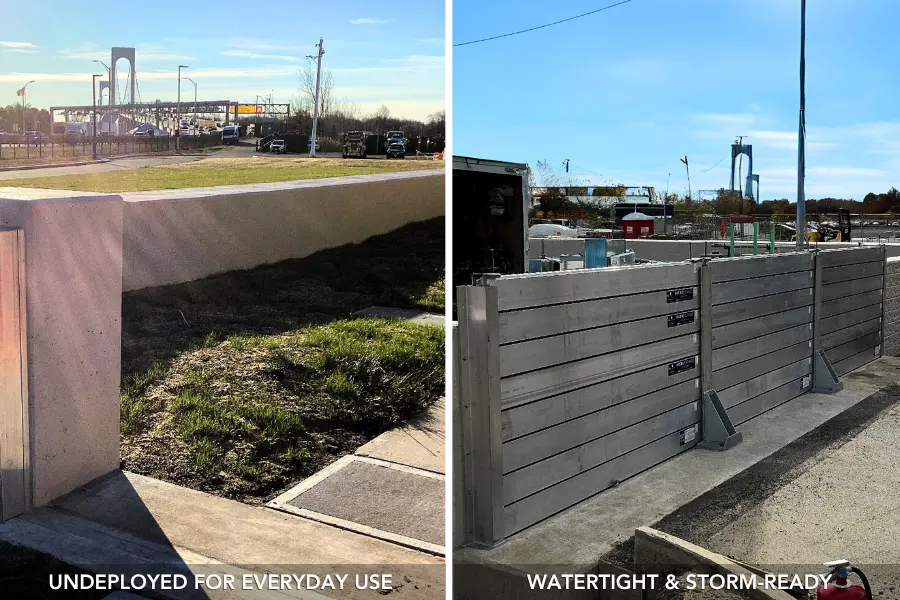
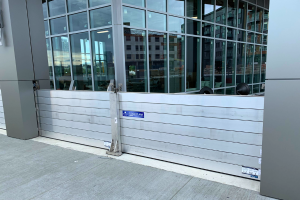
Flood Planks Installed At A Critical Service Building To Support Uninterrupted Bronx-Whitestone Bridge Operations.
Integrate Stackable Protection With Orange Flood Control, LLC
Integrate stackable systems with complete storm protection services. Orange Flood Control, LLC supports the nation’s most complex & critical resiliency projects. Our full-lifecycle approach provides solution-driven expertise throughout planning, protection, and long-term preparation stages. Coordinate design requirements with internal architectural support, then execute end-to-end installation with union-certified millwright technicians. Once your systems are in-place, maintain long-term readiness with field testing, annual maintenance plans, and hands-on personnel training. Throughout the project, our specialists work closely with facility managers, owners, engineers, and emergency management teams.
Our experienced team takes your facility’s unique vulnerabilities and flood risks seriously. We’ve integrated planks for commercial buildings, schools, multi-family properties, and municipal wastewater treatment plants (WWTPs). Before projects are scheduled, we perform site-specific assessments based on your staffing levels, advanced storm notice, and facility use case. Defend the access points, equipment, and infrastructure that matters most with Orange Flood Control, LLC.
On-Site Deployment Crew And Storage Requirements
Aluminum barriers have key requirements for on-site deployment crews, response times, and post-storm storage requirements. Before & after an emergency, stoplogs are stored in off-site carts, storage lockers, or racking systems. Our team integrates site-specific, customized storage solutions that keep equipment secure, safe, and organized until necessary. When emergency conditions are imminent, your deployment team can transport all the necessary hardware to the point-of-use.
On-site, total deployment time depends on your crew’s size, number of openings, and required protection heights. Before real-world deployment, we ensure your critical personnel fully understand the process:
- Remove Cover Assembly From Permanent Jambs
- Locate The Bottom Stoplog (Identified By Two 1” Watertight Gaskets)
- Position The Bottom Plank (Start With One Corner At A Time)
- Slide In Intermediate Logs (Number Depends On Your WPH)
- Install Latching & Compress Both Sides Uniformly
- Tighten Spin Know To 40 in-lbs. Torque
After waters recede, your team can easily retract equipment using the dedicated plank removal tool. Watertight gaskets and compression seals should be carefully inspected for damage. For any concerns, Orange Flood Control, LLC performs post-storm assessments to validate sills, fasteners, latching, and embedded components.
Stackable Planks vs Automatic Gates & Passive Doors
Before you make critical project decisions, compare stackable vs automatic & passive barrier options. There’s a range of factors that go into calculating your site-specific risk tolerance. Building owners choose planks for cost-efficiency, remote storage, and easy adaptability. Automatic & passive options are preferred for deployment speed, minimal involvement, and always-in-place solutions. Before you finalize a decision, our team performs on-site risk tolerance assessments & recommends project-specific solutions. Seamlessly collaborate between owners, architects, and GCs to compare devices with confidence.
| Feature | Stackable Planks | Automatic Gates | Passive Doors |
| Human Intervention Required | Require manual deployment by on-site, available, and trained personnel. | Fully self-activating, no human intervention, involvement, or electricity required. | Trusted for around-the-clock passive protection, whenever doors are closed & locked. |
| Advanced Storm Notice | Ideal for sites that have advanced notice before a storm hits. Coastal storms & hurricanes are more predictable. | Designed for sites with limited notice or warning time before risks are imminent. | Engineered for facilities with unpredictable flash or riverine storm concerns. |
| Property Value & Use Case | Suitable for properties that can afford pre/post-storm response, minimal downtime, and possible repairs. | Built for infrastructure & operations that cannot afford to go down. Trusted for around-the-clock continuous operations. | Passively integrated for facilities with a low risk tolerance – allows facilities to stay open, prepared, and resilient. |
| Annual Maintenance | Requires regular checks after storms, between uses, and following extended storage periods. Annual maintenance is recommended to maintain compliance, codes, and peace of mind. | Annual maintenance for inspections, components repair/replacement, and ongoing risk assessment based on current site challenges. | Maintenance recommended to check watertight gaskets, doors, and key components. Recommended annually or following major storms where doors were used. |
| Overall Risk Tolerance | Reliable option for facilities with a high tolerance for flooding risk. Buildings that have the time, notice, and resources required to deploy manual equipment – and accept the risk if systems cannot be stacked in time. | Investment for sites that have a low tolerance for risk – critical infrastructure sites, hospitals, citywide utilities, and public transportation system. | Passive options support continuity for buildings with a low storm risk tolerance. Doors are especially ideal for high-aesthetic sites with multiple interior/exterior openings. |
Inspections, Maintenance, & Training Plans
Commit to annual inspections, maintenance, and re-training. Our full-lifecycle team is available to support your property’s owners, design professionals, and key decision makers long after installation is complete. Our long-term preparation solutions cover annual maintenance plans with real-time field activity documentation. Once our in-house millwright technicians are on-site, the end-to-end maintenance process may include:
- Verify Serial Numbers, Asset Tags, & Storage Solutions
- Take Photos & Document Any Potential Damage
- Clean, Repair, & Service Permanent Components
- Remove Stackable Stop Logs From Storage
- Ensure All Parts Are Present & Fit Test Equipment
- Label All Components (Per-Opening) & Return To Storage
- Sign-Off By On-Site Technician & Maintenance Manager
For manual protection, personnel re-training is often recommended to keep your staff informed, knowledgeable, and prepared. Account for team members who were unavailable during the last training period, or hired in the last year. Our approach covers step-by-step instructions, hands-on deployment requirements, and customized site-specific videos.
Case Study: Custom Stackable Barriers & Bracing System Designed For Subterranean NYC Infrastructure
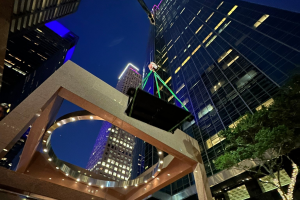
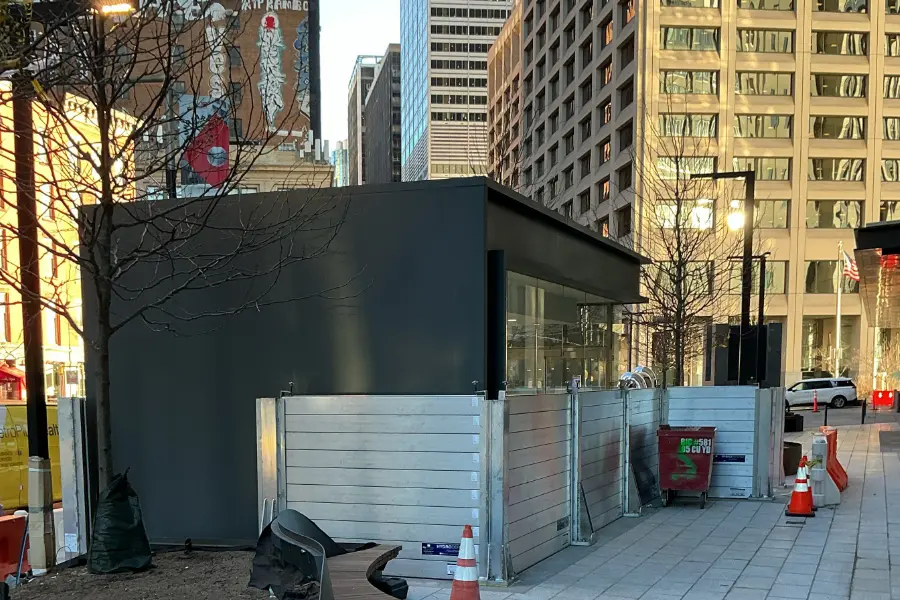
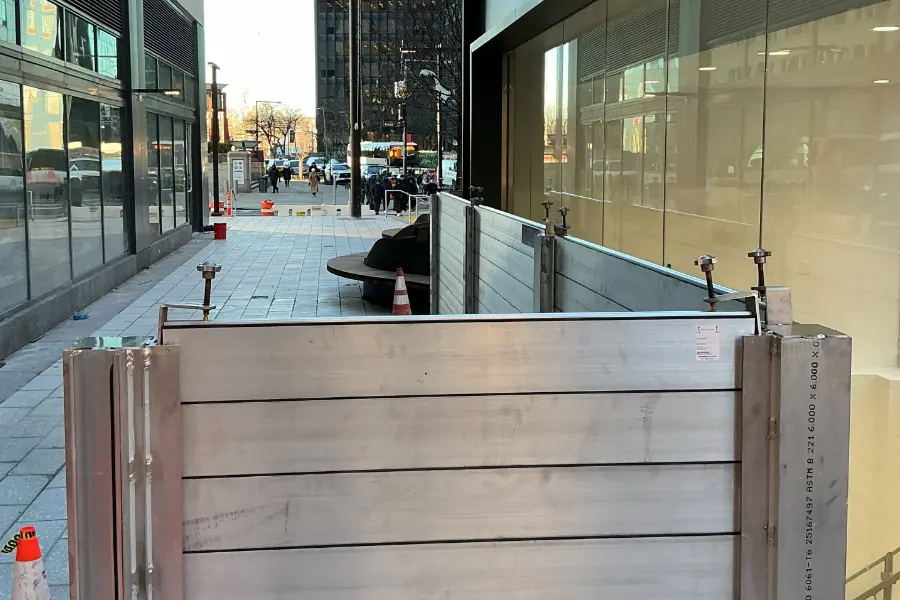
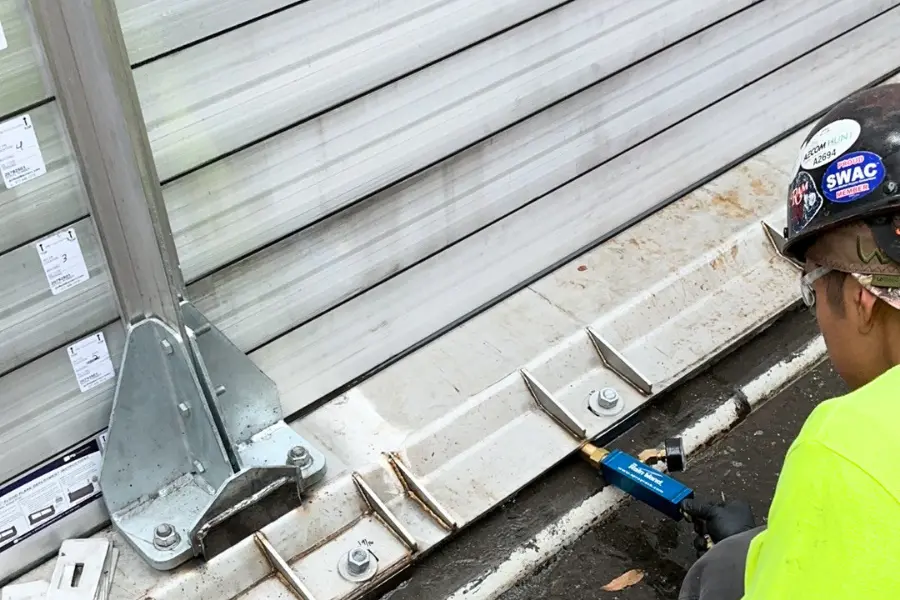
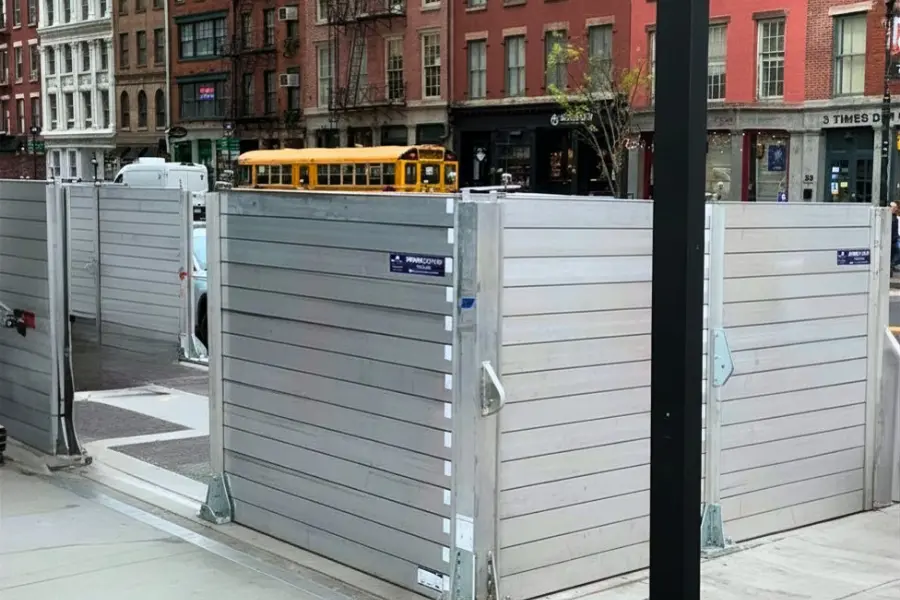
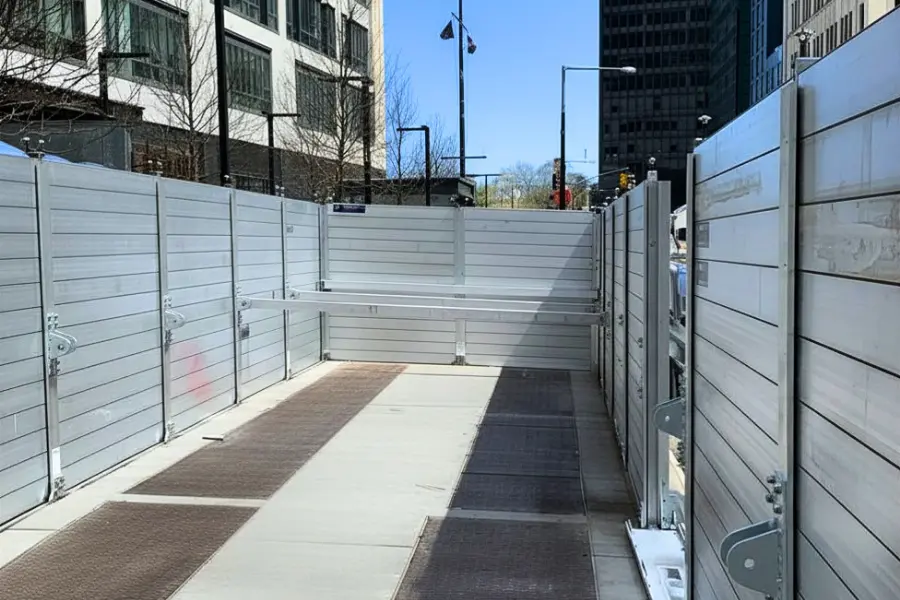
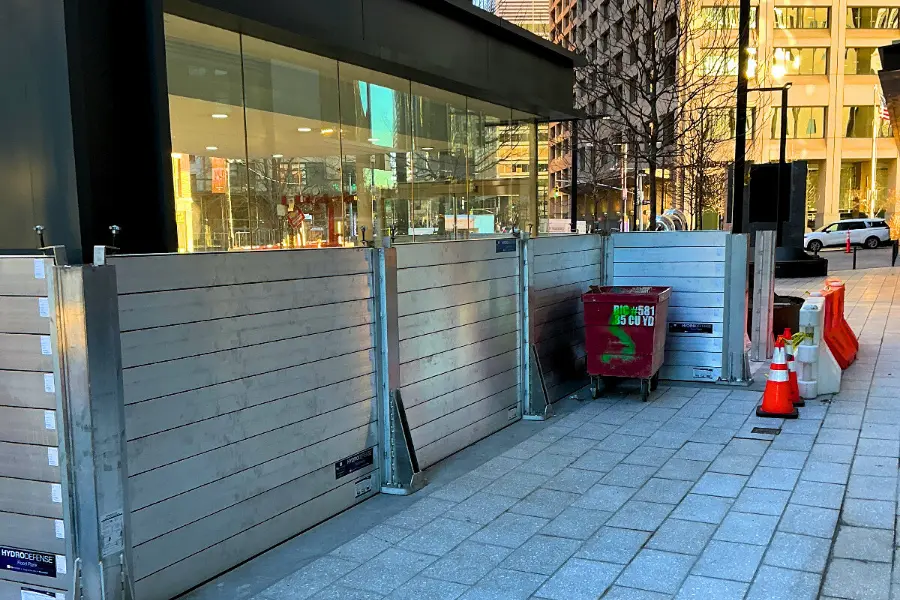
Orange Flood Control, LLC understands the unique resiliency challenges for protecting urban underground infrastructure. In Lower Manhattan, subterranean utilities, systems, and public transit networks require creative solutions to address coastal surges & flash flooding conditions. This high-traffic commercial site in NYC’s Financial District (FiDi) is home to a 32-foot skyscraper that suffered damage in 2012 during Superstorm Sandy, including to the facility’s basement electrical and mechanical control systems. The property was later redeveloped to a multi-family community in one of the largest commercial-to-residential property conversions in the United States.
Orange Flood Control, LLC integrated a stackable plank system with mid-span supports to maintain structural integrity and performance under significant hydrostatic pressure. This internally-braced system was designed & customized by our architect-led team to safeguard surrounding infrastructure and adjacent modern artwork. Once installation & fit testing was complete, we organized planks, turnbuckles, and other necessary hardware in downstairs storage rooms. Custom crates were used to support a rapid & efficient response for emergency management teams. Throughout planning, protection, and ongoing preparation stages – our solution-driven team coordinated directly with design professionals, engineers, and contractors to keep installation on-time & on-budget.



Where Do Stackable Barriers Deliver Resilient Protection?
Stacking stop logs are ideal for convenient, quick defense in spaces with low leakage acceptance levels. Interlocking planks utilize high-density, industrial-grade compression seals – which transfer hydrostatic pressure away from facilities. Access cost-efficient, dependable, and rapid-deployable options to reliably safeguard critical infrastructure.
High-Traffic Workspaces
Determine what device options are best for high-traffic commercial workspaces. Compare sandbags vs barriers to determine what level of defense is best for your building, equipment, assets, and employees. Stop logs are suitable for facilities with the available personnel & advanced storm notice. Devices take time to retrieve from storage, stack together, latch, and validate before a storm strikes. This can be a concern for facilities that don’t have trained personnel available 24/7/365. Speak with expert mitigation technicians & engineers to calculate your overall risk tolerance. This way, you can seamlessly integrate removable stop logs for easy-to-deploy protection.
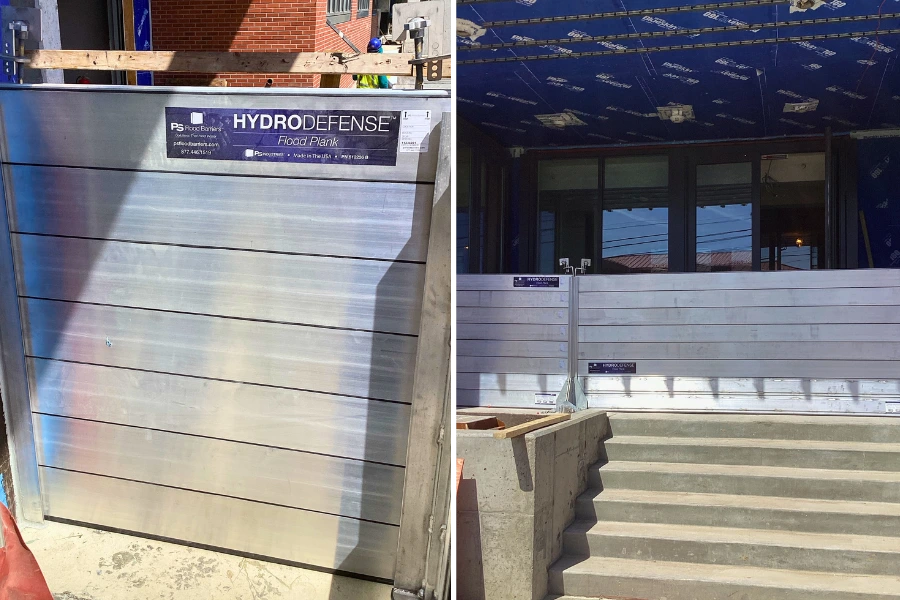
Custom Barrier System Installed At A Luxury Waterfront Apartment Community In Revere, MA.
Pedestrian Doorways & Entrances
Install rapid deployable barriers to protect interior pedestrian doorways & exterior entrances. Unobtrusive channel mounting posts are installed on either end of at-risk doorways – allowing aluminum planks to easily be stacked. In addition to 6’+ water protection heights, durable stop log devices can simultaneously handle debris impacts and high wind conditions. Even for exterior doorways, heavy-duty aluminum construction materials ensure reusability & reliability. For seamless integration, stop logs are customizable to your specific opening’s length, width, and height. Defend pedestrian doorways and entrances with stackable flood control device solutions.
Vehicular Driveways & Parking Lots
Keep vehicular driveways safe, watertight, and resilient with stackable plank devices. These commercial flood barriers remain in-place only during emergencies. After stormwaters recede, aluminum stop log are easily-removable – enabling unobstructed vehicular traffic to quickly resume. For added peace of mind, trusted plank solutions are tested to comply with FM & ANSI 2510 approval codes. Choose professional flood mitigation services that offer full-lifecycle, end-to-end project support. These resilient systems are designed, manufactured, and engineered to protect vehicular driveways & parking lots.
Commercial Garages & Loading Docks
Stackable aluminum stop log planks are ideal to defend commercial garages & industrial loading docks. For large garage openings, center mullions may be recommended to extend protection to unlimited lengths. For these applications, exterior mounting options are traditionally recommended to create a watertight seal around frames. Once a storm notice is issued, planks are quickly pulled from storage, placed, and sealed – with minimal hardware required. After an emergency, devices are easily-removable – allowing shipping, storage, and distribution operations to quickly resume. consider beveled aluminium plate, efficient installations and modular design to safeguard the property. Install stackable commercial flood protection systems to safeguard at-risk garage doors, loading docks, and extended openings.
Retail Storefronts
High-traffic retail locations can seamlessly protect storefronts with tested, certified, and watertight HydroDefense® flood planks. Specialized plank barriers are designed & engineered to protect extra-large openings. When not in-use, barriers are stored at remote locations – away from the vulnerable opening. This way, customer shopping & supplier deliveries can continue as normal. Easy solutions are only deployed when you need protection – typically after advanced storm notice is issued. Install aluminum flood barriers to provide long-lasting, resilient, and organized protection at retail storefronts.

Custom Stackable Barrier System With Emergency Stairs Installed At A 200-Acre Waterfront Campus In Brooklyn, NYC.
Full Building Perimeters
Keep full building perimeters safe, protected, and watertight with stackable stop log barriers. Connect & extend devices with center mullions to fully surrounds critical facilities. Full perimeter protection empowers emergency readiness at commercial buildings, WWTPs, pump stations, power plants, hospitals, and other at-risk facilities. Once corners are reached, custom systems are employed to seamlessly round 90° angles. Select resilient options for urban, flash, coastal, high waves and river excess flooding – along with a diverse range of emergency scenarios. Defend full building perimeters with available options for plank barriers.
Safeguard at-risk infrastructure assets with stop logs are engineered to defend pedestrian interior/exterior doorways. Seamlessly protect at-risk vehicular driveways & parking lots too. Plus, install extra large protect to surround commercial loading docks and full building perimeters. For retail shops & malls, planks are quickly deployed across vulnerable storefronts.
Frequently Asked Questions (FAQs)
How Do Systems Stack, Seal, And Lock?
These products are engineered & tested to form a structural watertight wall when properly stacked together. The lowest plank is built with an additional bottom gasket that seals against embedded sills or concrete. Successful installation requires a completely smooth, flat, and level surface with no cracks or deficiencies. Systems are equipped with structural anchors, latch locks, and T-locks to mechanically secure key components in-position. For full-customizability, request a spin-down latch that supports varying WPH requirements – depending on your number of planks. Heavy-duty options are specifically manufactured with minimal moving parts to prevent costly errors or delays during emergency response scenarios.
What Are Height Limits & Horizontal Spans?
These active systems can be fabricated and tested for up to 13’ water protection heights (WPH). Unique spin-down latching systems allow you to customize the number of planks & barrier height based on the forecasted storm conditions. High-strength single stoplogs can span up to 10’ horizontal spans. Optional bracing components allow spans to be extended up to approximately 20’. For continuous perimeters, large vehicular openings, or end-to-end loading docks – connect multiple spans with removable center mullions. Connect protection to cover 90-degree turns, multiple access points, or safeguard underground utilities from street-level.
Are Devices ANSI/FM 2510 Tested & Approved?
Aluminum stoplogs are engineered to meet requirements from the American National Standards Institute (ANSI) and FM Approvals. Before delivery & installation, products are tested to ANSI/FM 2510-2020 flood protection standards. Devices are required to pass Hydrostatic Load Test Section 4.3.3 performance criteria. These procedures focus on leakage/seepage levels, impact resistance, and overall structural integrity. All inspection processes are performed by independent, third-party observers to ensure unbiased evaluations, procedures, and results validation. Ensure your selected devices meet specific performance criteria for reliable operations & functionality under simulated conditions.
How Much Do These Products Cost?
Because of the customization, design planning, and precision coordination required – there is no clear per-plank cost estimate for U.S. buildings. Before preparing an estimate, our team performs architect-led consultations, risk tolerance assessments, and recommends project-specific solutions. To accurately determine material, installation, and ongoing maintenance costs, we help you determine:
- How Much Risk Can You Afford To Accept? These systems are built for sites with around-the-clock staffing availability, advanced notice, and a limited number of openings. If your site requires uninterrupted 24/7 operations and continuous uptime, consider automatic, self-activating alternatives.
- What Needs To Be Protected? Consider the value of the building control systems, core utilities, and infrastructure that requires defense.
- How Many Openings Require Protection? Protecting a single door, elevator, or window can be quick and cost-efficient. Whole-building mitigation requires specialized coordination, schedule alignment, and synchronized operations.
Request an initial consultation with Orange Flood Control, LLC to access internal architectural support, project management, and documentation coordination.