Today, flood damage is one of the most pressing risks facing healthcare facilities and medical campuses in the United States. When floodwaters from Superstorm Sandy entered the NYU Langone Medical Center in 2012, they rapidly spread through the facility’s interconnecting conduits and corridors. As a result, the medical campus suffered major damage to critical utilities, electrical power generation systems, and HVAC appliances. In addition, components of center’s communications networks and medical offices were rendered inoperable. According to FEMA, life-saving medical equipment like oxygen tank sliders and respirators were inundated and contaminated with stormwater.
Building Resilient Hospitals With Flood Mitigation Solutions
Compare innovative flood mitigation solutions for resilient US hospitals. Healthcare facilities throughout the United States are continuously planning for unpredictable storms, hurricanes, and rising sea level risks. Today, proactive facilities are designing, strengthening, and reinforcing infrastructure to withstand extreme natural disasters.
Turn-key flood mitigation companies have installed solutions at medical properties across the country:
- New York City
- New Jersey
- Florida
- Massachusetts
- Texas
- Maryland
- Tennessee
- Rhode Island
- Illinois
- Michigan
- Pennsylvania
- North Carolina
- Ohio
Read on to learn about building resilient hospitals with flood control products.
Automatic Gates
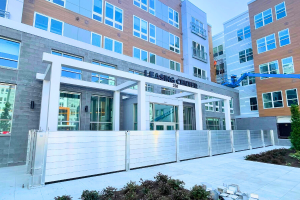
Automatic flood barriers are designed to protect medical personnel, administrators, patients, and visitors. These powerful systems deploy automatically without human involvement or electrical power. Integrate flood mitigation barriers at vulnerable access points – or surround full building perimeters. Minimize flood risk with dependable, self-activating solutions – engineered for uninterrupted reliability & long service lifespan. In addition to storm protection, specialized devices are available for automatic spill containment in healthcare storage areas, equipment rooms, and laboratories. Keep your healthcare environment watertight & resilient with automatic gate barriers.
Watertight Doors
Watertight doors deliver passively-deployed, always-in-place protection for nationwide clinics & facilities. These systems are engineered for peace of mind at primary entrances, interior/exterior doors, underground basements, hallways, and loading docks. Unlike traditional hollow doors, these purpose-built devices are designed specifically for nationwide flood, building, and accessibility codes. For added protection, steel fire-rated doors stand out for lowest industry leakage/seepage levels. These systems are rated & approved by:
- Florida Approval For High Velocity Hurricane Zones
- UL10C 90-Minute Fire Rate
- ANSI 2510-2020
- FM Approvals
- ADA Compliant
Secure your facility or campus 24/7/365 with resilient flood door solutions.
Integrated & Compliant Walls
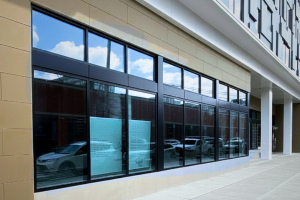
Integrate compliant flood wall barriers to strengthen hospital protection & resiliency. These systems are heavy-duty, durable, compliant, and trusted by wellness facilities across the country. Walls use state-of-the-art, corrosion-resistant materials to deliver a long-lasting, permanent solution. To preserve architecture & maintain interior/exterior aesthetics, consider glass wall systems. These high-strength solutions are engineered for watertight & debris impact-rated defense. Secure your critical site with water diversion walls.
Stackable Aluminum Planks
Aluminum stackable flood barriers can quickly protect hospital buildings with the available personnel & advanced notice. These systems use removable stop logs to create a durable, watertight seal. Deploy barriers across emergency vehicle entrances, elevator cores, interior/exterior doorways, or medical equipment rooms when storms are expected. After the storm, planks offer space-efficient off-site storage – with minimal required components & supporting hardware. Rapidly-deployable planks are a cost-efficient solution for healthcare facilities looking to secure a single entrance or access point. For waterfront or urban campuses with multiple at-risk openings, self-activating barriers may be a more reliable alternative. Install aluminum flood planks for storm protection at US hospitals.
Temporary Removable Panels
Removable flood panel barriers are used to defend medical properties nationwide. Integrate panels to protect doctors, surgeons, nurses, admins, and maintenance staff – along with visitors & representatives. Of course, these temporary flood mitigation solutions need to be manually deployed once a storm notice is issued. After the storm, panels are easily-removable – enabling your site to quickly resume full capacity. Keep in mind, this end-to-end process can be somewhat labor-intensive & time-consuming. Speak with hospital mitigation experts & technicians about temporary flood panel options.
Resilient solutions are in-place to defend hospitals across at-risk cities, communities, and waterfront locations. Keep in mind, these are just some of the available options for resilient protection. Schedule a consultation to learn about additional alternatives – including watertight hatches & glazing systems. Follow the points above to learn about resilient flood mitigation solutions & services for United States hospitals.
The Role Of Hospitals In The Community
Critical-need, acute care facilities are vital to provide 24/7 emergency care and a range of healthcare services to the community. These facilities administer life-saving pediatric treatments, surgical operations, and childbirth deliveries. Unprotected facilities face constant flood risks to campus-wide equipment, contents, and technology. Resilient flood mitigation devices serve as a first line of defense, protecting critical need medical buildings. In addition to medical facilities, resilient devices support a range of infrastructure applications – including flood doors for commercial buildings, schools, and multi-family communities.
To drastically reduce water damage risks, sites must implement flood protection barriers in these critical areas:
- Intensive Care Units (ICU)
- Emergency Room Departments
- Surgical Operating Rooms
- Delivery Rooms
- Ambulatory Entrances
- Nursing Stations
- Medical Training Classrooms
- Medical Offices
- Oxygen Storage Areas
- Public Entrances
- Reception Lobbies
- Parking Garages
- Pharmaceutical Departments
- Medical Storage Units
- Cafeterias And Kitchens
- Elevator Cores
- Critical Building Systems
- Power Generation Stations
- HVAC Utility Room
Understand Processes & Requirements
On complex medical facility projects, our solution-driven process begins with understanding and listening to the design professional’s or engineer’s needs. During this time, we assess, examine, and review flood mitigation risk tolerance. Then, we diagnose the problem that needs to be solved and evaluate your medical center’s risk tolerance. Once you have a unified flood mitigation strategy, and keep you informed with needs related to staffing and device deployment.
Design High-Aesthetic Solutions
Next, specialized technicians move into flood mitigation design. During this phase, we help you select resilient devices and products that seal perimeters from surging stormwater. Then, we lay out your design requirements, and put this all into our facility protection action plan.
Prepare & Execute Commitments
After your flood mitigation consultation, reivew project commitments & documents. During this phase, teams plan, review, and distribute timelines. Then, we prepare comprehensive proposal reviews with a complete breakdown of budget, methodology, and outcome. Once approved, we prepare a final contract for architects, engineers, and design professionals to review. It is time to install healthcare facility or commercial flood mitigation systems.
Install Resilient Barriers & Systems
Once contracts are signed, it is time to execute the project. At this point, we finalize drawings, create documents, and begin installing automatic flood gates, planks, or recommended barriers. After installation, our solution-driven team provides testing, training, maintenance, and responsive flood mitigation services to your facility team.