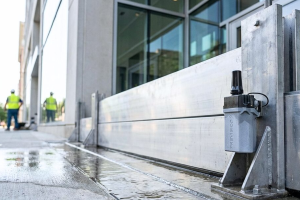
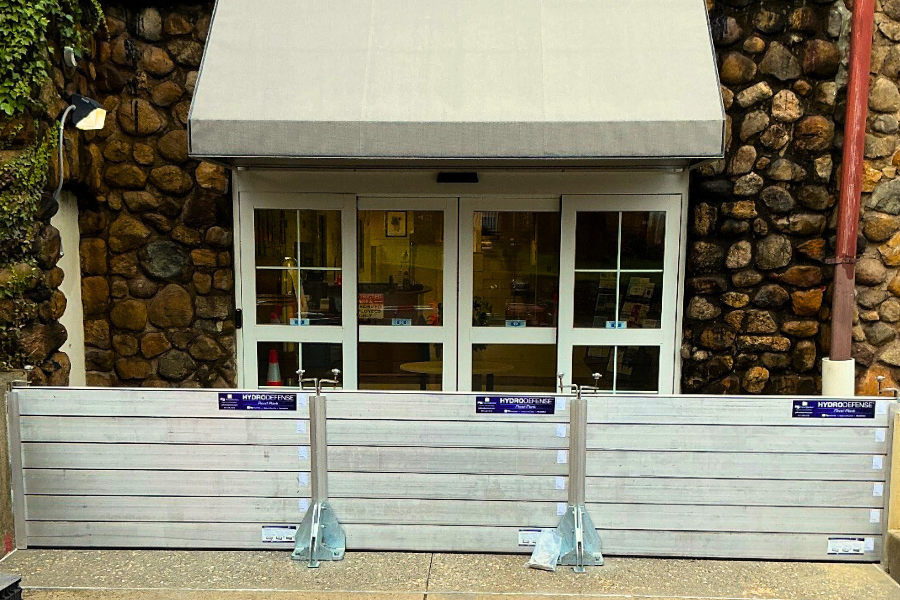
Review flood mitigation system requirements for new buildings & existing construction. Nationwide, resilient systems are trusted to protect commercial buildings, military/government assets, multi-family communities, hospitals, schools, power/pump stations, and critical infrastructure. Products are custom designed, engineered, and manufactured to align with site-specific building codes, compliance standards, and flood risk tolerances.
Key goals for integrating systems include:
- Protect Human Life, Safety, & Wellbeing
- Minimize Economic Loss & Property Damage
- Ensure Operational & Service Continuity
- Preserve & Strengthen Resilient Infrastructure
- Increase Public Preparedness & Awareness
- Restore & Enable Natural Floodplain Functions
As a building owner, integrate resilient equipment to address unpredictable weather patterns, hurricanes, and natural disasters. Read on to learn about flood mitigation system requirements for new/existing construction developments.
Required Flood Prevention Systems & Solutions
Analyze requirements, standards, and specifications for different types of flood mitigation devices. Compare resilient products recognized, approved, and trusted by the National Flood Insurance Program (NFIP). This agency supports reliable coverage for property & business owners in high-risk floodzones. Collaborate with architect-led flood control companies to compare systems for structural/non-structural mitigation, self-activating defense, and green infrastructure:
- Permanent Barriers
- Glass Walls
- Watertight Flood Doors
- Pop-Up & Flip-Up Barriers
- Wet & Dry Floodproofing Equipment
- Stackable Flood Planks
- Stormwater Management Solutions
- Removable Flood Panels
- Levees, Dikes, Dams, & Floodwalls
- Floodplain Restoration Strategies
Compare system & product requirements for commercial flood mitigation.
Integrated, Self-Activated Strategies To Mitigate Localized Flooding
Prioritize fully-integrated, automated flood mitigation strategies that don’t rely on available personnel or resources. Models for resilient infrastructure design focus on containing, absorbing, or diverting rainfall. The goal is to minimize/eliminate stormwater pooling in streets, in front of buildings, or inside your facility. Embrace methods that support continuity, enable operational efficiency, and avoid overwhelming your facility networks/processes. This way, you can achieve resiliency goals without sacrificing profitability, safety, or peace of mind.
Before speaking with an architect-led company, get answers to the following questions:
- How to protect my business, operations, and personnel?
- What about my basement?
- How can I calculate risk & identify vulnerabilities?
- What is my Base Flood Elevation (BFE)?
- What solutions is my community using?
- What non-structural options are available?
- How do similar cities, projects, and infrastructure manage this?
- What if storm concerns are imminent?
- Do I need specialized insurance?
- What about health & safety risks?
Choose flood mitigation solutions that are self-activating, always-in-place, and automatically-deploying.
Community Flood Barrier Options For Waterfront & Coastal Cities
Follow community-wide methods, models, and techniques for professional flood mitigation. Across the United States, communities can take proactive, forward-thinking actions to address how they experience natural disasters. Common citywide tactics include:
- Modifying, Removing, & Strengthening Existing Structures
- Investing In Stormwater Control Systems
- Adopt Products To Manage Water Flow
- Establish New Laws, Requirements, Codes, & Standards
- Engage The Community In Impactful Flooding Decisions
- Participate In Federally-Sponsored Programs
- Support NFIP Measures To Reduce Insurance Premiums
- Improve Scores On The Community Rating System (CRS)
- Empower Residents, Business Owners, & Employees
- Establishing Community Response Plans & Evacuation Routes
- Ensure New Construction Meets US Floodproofing Standards
- Complete Studies To Understand Options & Improvements
Across the USA, communities can take multiple steps & actions to protect industries with flood mitigation.
Flood Preparedness Models & Requirements
Analyze flood preparedness models for construction projects, existing architecture, and multi-use properties. Take steps to ensure readiness and minimize potential damage to your people, property, assets, and equipment. The Federal Emergency Management Agency (FEMA) is an agency under he US Department Of Homeland Security (DHS) that helps at-risk communities prepare for, defend against, and respond to emergencies. Their notable preparedness guidelines include:
- Develop An Emergency Plan
- Activate Flood Mitigation Barriers
- Shut Off The Main Building Electricity
- Safeguard Important Belongings & Paperwork
- Elevate Major Equipment & Appliances
- Deploy Temporary, Manual, & Portable Products
- Establish Business Evacuation Routes, Shelter Plans, & Response Strategies
Nationwide Flood Mitigation Legislation For US At-Risk Infrastructure
During your initial flood mitigation consultation, feel free to ask questions about current requirements, guidelines, and legislation. The latest updates in storm mitigation include the $19B Spring 2019 Disaster Aid Package – which was designed to support states impacted by 2017-19 emergencies. This supplemental program included:
- $1B For A Flood Control & Coastal Emergencies Account
- $2.4B For Community Development Block Grants
- $50M For National Oceanic Atmospheric Administration (NOAA) Forecasting
- $800M For US Army Corps Of Engineers (USACE) Reduction Projects
- $50M For Title IX Funding & Coastal Resiliency Partnerships
Previously, change came from the Fall 2018 Disaster Recovery Reform Act (DRRA) and House Resolution 302 (HR 302). This covered a full range of emergency phases while increasing federal resources for proactive, pre-storm mitigation. Speak with flood mitigation companies to understand United States legislation & regulatory changes for building resiliency.
Understand system requirements for flood mitigation design, device selection, installation, and maintenance. Exact standards & specification depend on the project you’re planning. Overall, key measures include:
- Design & Base Flood Elevation (DFE & BFE)
- Waterproofing Needs
- Building Codes
- Documentation & Permits
- NFIP Compliance
- Technical Feasibility
- Environmental Compliance
- Local, State, & Federal Response Plans
Follow the points above to learn about storm mitigation system requirements for new & existing construction projects.