Flood mitigation technologies, devices, and solutions drastically reduce the risk of structures experiencing water damage. Mitigation is the effort to minimize property damage, loss of life, and the overall impact of natural disasters. Proactive techniques emphasize taking action now – before the next catastrophic weather event strikes. Taking quick action can help you protect critical infrastructure, commercial buildings, and industrial facilities against risk. With the amount of natural disasters constantly increasing, there has never been a more pivotal time to expand on control efforts. You have likely seen images of disastrous property damage, all caused by surging floodwaters. Or, maybe you’ve even experienced the catastrophic effects of these natural disasters yourself. After all, floods are some of the most common, hard-to-predict, expensive, and deadly form of weather events in the United States. All over the U.S, floods are caused by broken water dams, rainfall, hurricanes, and snow melt. Since these unpredictable events can occur at anytime, you always need to be prepared for a swift, effective response.
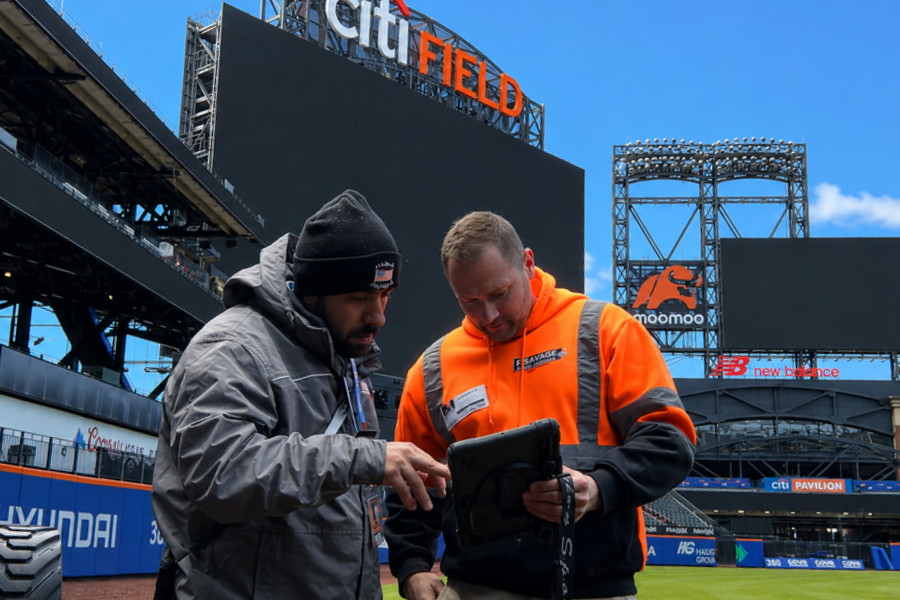
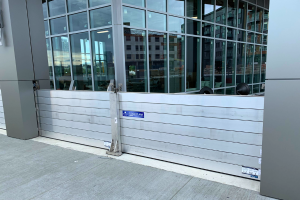
Orange Flood Control, LLC At Citi Field In Queens, NYC.
Know Your Flood Risk: Zones, BFE, & Design Flood Elevation
Before you start projects, understand your facility & business’s flood mitigation risk tolerance. Across the country, many building owners rely on Flood Insurance Rate Maps (FIRMs) and zone classifications from the Federal Emergency Management Agency (FEMA). For high-value facilities focused on dependable & continuous disaster resilience, additional site-specific assessments may be recommended. Coordinate with design professionals, engineers, contractors, and hazard mitigation specialists to integrate systems for 100- and 500-year weather events.
With specialized risk mitigation companies, the assessment process starts with internal architectural support, project management, and documentation coordination. Our architect-led team helps you navigate codes, compliance, and risks with confidence & clarity:
- What Is Your Advanced Storm Notice & Response Time?
- Do You Have 24/7 Staffing Availability?
- What’s The Type Event? Coastal Storms, Riverine/Flash Flooding, Debris Impacts?
- What Water Protection Heights Are Required?
- Do You Need ANSI/FM 2510 Or ASCE 24-24 Compliance?
- What Are The Base (BFE) & Design Flood Elevation (DFE) Requirements?
- How Many Openings Does My Property Have? What Size Are They?
- What Local Requirements & Construction Permits Are Needed?
- Can These Efforts Reduce My Insurance Premiums?
- Does The Property Require Vandal-Resistant Solutions?
- Are Devices Needed For Buildings Or Street-Level Protection?
Based on these insights, specialists calculate risk score & recommend project-specific solutions.
Nationwide Codes & Standards That Govern Projects
Consider the local building codes & nationwide standards that will govern your project. Specific municipal and federal requirements address construction techniques, sourcing/procurement methods, and specific building materials. Minimum standards for structural work, safety, and occupant/public health welfare are often based on the model International Building Code (IBC).
As part of mitigation project planning, Orange Flood Control, LLC offers specialized design, consulting, and compliance services. Navigate ANSI/FM 2510 approvals, ASCE 24 resistant design standards, and Build America, Buy American (BABA) compliant products.
- ANSI/FM 2510: American National Standard for flood abatement, developed by FM Global, the Association of State Floodplain Managers (ASFM), and US Army Corps of Engineers (USACE). Ensures systems are tested for hydrostatic load resistance, debris impacts, and low seepage/leakage rates.
- ASCE 24: Developed by the American Society of Civil Engineers, this remains one of the primary guidelines for design & construction in special flood hazard areas (SFHAs).
- FEMA TB 3: Technical Bulletin 3 emphasizes dry floodproofing requirements for mixed-use & non-residential properties, based on official National Flood Insurance Program (NFIP) guidance.
- FEMA P-936: July 2013 standards for non-residential buildings. Clarifies primary/secondary methods, environmental limits, and load resistance.
- BABA: Ensure compliance for federally-funded resiliency management projects with domestic, US-made materials – compliant with the Build America, Buy American Act (BABAA).
- LEED: Our team supports LEED Gold Certified and Green Buildings. Integrate engineered systems for watertight protection, backflow prevention, and stormwater management – while meeting LEED v5 requirements.
Align compliance standards to select the right approach, flood mitigation barriers, and long-term emergency readiness strategy.
How Orange Flood Control, LLC Approaches Mitigation
Orange Flood Control, LLC helps building & business owners take action against how they manage storms. Our end-to-end, professional mitigation services combine multiple measures, solutions, and device options. In addition to integrating physical systems, we help you manage compliance with updated building codes, testing standards, and resilient design requirements. Start with critical systems, structures, and building control systems that need to stay operational 24/7/365.
Our complete, full-lifecycle approach helps facilities integrate versatile defense & stay protected long-term. During construction, our solution-driven processes keep projects on-time and on-budget. Here’s how our team supports projects throughout architect-led planning, protection, and preparation:
- Flood Mitigation Design: Experts coordinate with owners, architects, GCs, and key project stakeholders to review requirements & project documentation.
- Architect-Led Consultations: Execute risk tolerance assessments, select barriers, and decide on project-specific solutions.
- Project Compliance: Ensure your strategy aligns with FM Approvals, FEMA dry floodproofing standards, and ASCE 24 / 7 design criteria.
- Fabrication, Supply, & Delivery: Job site coordination, logistics, and tracking – with products from established & certified manufacturers.
- Pre-Install Coordination: Keep projects on-schedule and on-budget with heavy-equipment logistics, device mobilization, and multi-trade collaboration.
- Certified Installation: Millwright technicians synchronize field and office operations to keep stakeholders informed throughout the process, from embed placement to fit/water testing.
- Field Hydrostatic Water Testing: Verify seals, compliance requirements, and building codes with documented performance.
- Annual Maintenance Plans: Thorough inspections, components repairs, and full barrier replacement. Experienced technicians document & photograph field activity in real-time.
- Personnel Training: Strengthen emergency response processes & efficiency with comprehensive presentations, hands-on training, and deployment videos.
Our team understands the importance of keeping critical infrastructure operations & equipment uninterrupted around-the-clock. We’ve completed projects for essential hospitals, wastewater treatment plants, and public transit networks – including Jersey City Medical Center (JCMC), Brooklyn WWTPs, the Metropolitan Transportation Authority (MTA), and Citi Field.

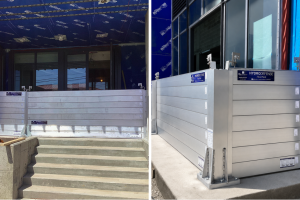
1 Of 27 Total Flood Gates Installed In The North & South Zones Of Hoboken, NJ As Part Of The Rebuild By Design Hudson River (RBDH) Project.
Types Of Systems & Barriers
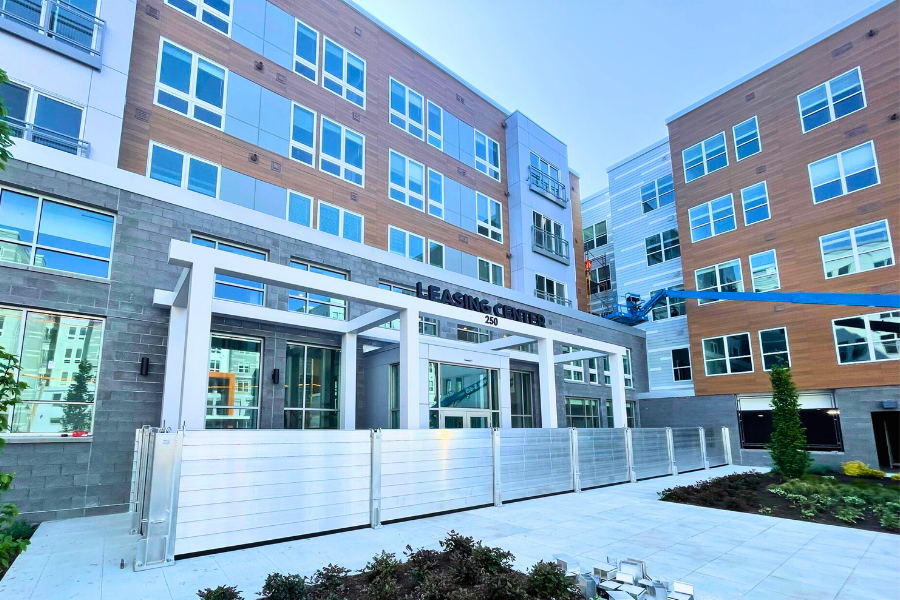
Integrate floodwalls, planks, doors, and other devices to divert water away from commercial or critical infrastructure. Use structural measures to promote natural disaster risk reduction throughout your facility. Plus, structural projects are known to help firms achieve hazard resilience and resistance for their most valuable assets.
Select solutions from established and certified manufacturers, trusted to support continuous and uninterrupted facility operations. Compare permanent, temporary, point-of-use, active, and passive flood mitigation devices:
- Planks
- Window Protection
- Swing Gates
- Watertight & Fire-Rated Doors
- Windows
- Rapid Deployment
- Automatic Gates
- Sliding Doors
- Panels
A dependable flood mitigation system can involve any combination of the active or passive devices mentioned earlier. Barriers, planks, doors, and walls are all core components of your potential system. Specialists may recommend a combination of passive, active, temporary and point of use solutions. They are regularly used to mitigate damage on commercial, industrial, institutional, municipal, or critical infrastructure. When designed and installed correctly, these powerful solutions can defend against flash flooding, storm surges, and coastal natural disasters. Compare the different types of systems, devices, products, and barriers that fit your project’s requirements.
Structural Flood Mitigation Services
Fortunately, there are several structural mitigation services to protect against these catastrophic natural disasters. Most commonly, firms protect their facilities with flood planks, gates, doors, and containment devices. These dependable barriers are used to protect corporate business headquarters, critical infrastructure assets, water treatment plants, shopping malls, and municipal facilities. To assure quality and reliable performance, these devices are sourced from reputable global partners and distributors. The result is powerful systems that are effective, valuable, and most importantly – dependable. Determine the differences between structural & non-structural mitigation services.

Specialized Overnight Project Coordination For The NYC Subway At Hunters Point, Queens, NYC.
The Future Of Resilient Mitigation
Experts in environmental engineering are also beginning to discuss what the future of flood risk mitigation holds. The United States is quickly rising to the forefront of innovative flood prevention and control technologies. Businesses, engineers, and property owners are beginning to take a more urgent approach to defend against rising sea levels. This is especially true for corporations that operate near coastal shores. Over the past 30 years, U.S. firms have been looking for new ways to deal with surging storm water. Of course, the rise of structural flood control systems and devices have proven a reliable solution to this urgent issue.
If your company needs a proactive approach to handle hazardous stormwater, you need to work with a mitigation specialist. Orange Flood Control, LLC specializes in flood mitigation strategies, full-service design, device sales, installation, service, and maintenance services for residential, commercial, municipal, and industrial clients.
Integrate a sophisticated network of dependable devices, barriers, walls, and flood doors for commercial buildings. Of course, all of these powerful devices together make up your site-specific flood mitigation solution. With this core foundation in mind, you’ll also want to familiarize yourself with what the future of flood control and stormwater management looks like. Follow the points highlighted above to learn about the technology and strategies revolutionizing flood mitigation plans in the United States.