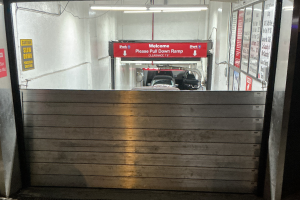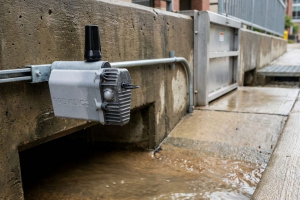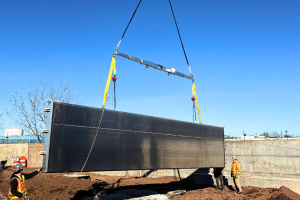


Review automatic flood protection system design guidelines for critical infrastructure, commercial buildings, and nationwide facilities. Automatic and passive flood barriers are engineered for self-activated storm control. These devices use the power of rising water & hydrostatic pressure to autonomously defend at-risk infrastructure from costly damage – with minimal maintenance, human intervention, or external power. Across the United States, automatic deployment systems are trusted to protect people and operations for a range of sites:
- Commercial Buildings: Retail stores, office buildings, corporate headquarters, hospitality industry facilities, hotels, restaurants, service buildings, and data centers
- Industrial Properties: Factories, warehouses, manufacturing hubs, loading docks, logistics hubs, equipment storage, automatic chemical spill containment, utility stations (wastewater, electricity, water)
- Public & Transportation Hubs: Subway stations, metro networks, underground shopping malls, pedestrian walkways, tunnels, and portals
- Critical Infrastructure: Municipal/federal government buildings, waste/energy facilities, interior and exterior building openings
- Hospitals: Building perimeters, entire campuses, main lobbies, emergency room entrances, loading docks, parking garages, fire exits, internal hallways, sensitive equipment rooms, chemical storage spaces, elevator cores
- Schools: Students, faculty, administration, building infrastructure, classrooms, learning environments, gymnasiums, and theaters
- Multi-Family Residential: Apartment buildings, residential homes, waterfront communities, maintenance properties, loading docks, delivery rooms protect doorways
As a building owner, integrate automatic flood gate barriers with proven performance, independent party validated testing, and high design aesthetics. Read on to learn about automated flood protection design requirements, standards, specifications, and guidelines.
Custom Engineered Automatic Flood Protection With Corrosion-Resistant Construction
Prioritize automatic flood barriers designed for always-ready protection – engineered with corrosion-resistant materials. Passive flood barriers are built with all-aluminum basins and panels to ensure minimal maintenance and long service life. Stainless steel fasteners and UV/chemical-resistant seals are used for key hardware as well. In the resting position, components remain hidden and nearly invisible – minimizing exposure until flooding occurs. Simultaneously, this keeps your equipment & protected area safe from weather-related exposure and vandalism concerns.
Design guidelines for corrosion resistant systems highlight:
- Load Rating Engineered To AASHTO HS-20 And H-20 Standards
- Flush Installation Ensures No Tripping Hazards On Walk/Drive Surface
- Can Be Deployed Manually With Electronic, Push-Activated Options
- Built With Marine-Grade Aluminum, Stainless Steel, & Coated Steel
- Integrated Design Meets Existing Aesthetics & Resilient Building Architecture
- Permanently Installed & Automatically Lifts With No Power Required
- Under Ground Installation Maintains Accessibility For Driveways & Parking Lots
- Automatically Raise & Drainage Of Floodwater Post-Storm
Choose custom engineered passive flood barriers featuring durable corrosion-resistant construction.
Self-Closing, Pop-Up, & Flip-Up Flood Control
Automatic pop-up and flip-up flood barriers have unique design configuration, requirements, and guidelines. Flood mitigation design companies customize solutions to align with unique lengths, angles, directional changes, and sections. Collaborate with licensed architects, engineers, and manufacturers to build custom-design flood defenses – aligned to your flood mitigation risk, response team, human intervention goals, and precise vulnerabilities. These self-closing barrier solutions have been integrated to protect utility sites, waterfront assets, and entire cities across the United States, including:
- New York City, New York
- New Orleans, Louisiana
- Miami, Florida
- Houston, Texas
- Norfolk, Virginia
- Tampa, Florida
- Charleston, South Carolina
- St. Petersburg, Florida
- Metairie, Louisiana
- Mobile, Alabama
- Bergen County, New Jersey
- Sacramento, California
- Cape Coral, Florida
- Virginia Beach, Virginia
Integrate self-rising, pop-up, and flip-up automatic flood gates – designed for your resiliency goals, initiatives, and tolerances.
Automated Flood Defense Designed For Critical Infrastructure
Automated flood protection solutions are manufactured, engineered, and integrated for critical infrastructure applications. Passive flood barrier solutions keep the United States’s most valuable infrastructure protected against rising flood waters, heavy rainfall, unpredictable storms, and natural disaster conditions. Systems incorporate multiple safety features & advanced deployment capabilities that keep properties resilient before, during, and after the storm. These systems are necessary for critical infrastructure & transportation hubs for a number of reasons:
- Supports Uninterrupted Operations & Continuity
- Eliminates Human Error Or Delay
- Protects Expensive, Vital, & Irreplaceable Equipment
- Maintains Access, Compliance, & Accessibility
- Reduces Damage, Costs, & Loss
- Remains Hidden, Aesthetic, & Concealed
- Addresses Future Climate Change Risks
Understand design guidelines & standards for passive flood mitigation at resilient infrastructure sites.
Automatic Flood Barriers Engineered For Compliance, Performance, & Resilience
Heavy-duty, self-activating flood barriers are engineered for performance, resilience, and uninterrupted compliance. The right flood protection systems can help your facility meet nationwide guidelines for chemical spill containment and rising water protection. Flood barriers undergo independent party validated inspections for watertight performance, seal integrity, and mechanical cycles. These procedures measure reliability against floodproofing standards:
- Environmental Protection Agency (EPA)
- FM Global Flood Barrier Requirements (FM Approved Flood Barriers)
- American National Standards Institute (ANSI/FM 2510)
- Occupational Safety And Health Administration (OSHA)
- American Society Of Civil Engineers (ASCE 24-24)
- United States Army Corps Of Engineers (USACE)
- Build America, Buy American (BABA Standards)
- FEMA Dry Floodproofing Standards (FEMA Compliant Barriers)
Review the system requirements & compliance standards for passive flood protection systems.
Product & Design Specifications For Automatic Flood Gates
Carefully review product & design specifications for automatic flood barriers and flood gates. Device specs are custom built & site specific to match your flood risk & protection requirements. Products are built with long-lasting, durable, and watertight components that support repeat use.
Key design principles & technical specifications:
- Passive Operation & Integrated Flood Control Design
- Flush-To-Ground When Not In Use
- Automatic Reset After Rising Water Recedes
- Self Rising When Hydrostatic Pressure Is Detected
- Deployed With No Human Intervention
- Heavy-Duty Aluminum & Stainless Steel Construction
- High Load Capacity For Floodwater
- Tested For Water Velocity & Long Service Life
- Supports Business Continuity
Understand unique product requirements, design guidelines, and install specs for automatic flood barrier protection.
Review design guidelines for automatic flood barriers and flip up flood protection – designed to protect properties with no human intervention. Automatic flood gates securely protect properties when floodwaters rise. These flood barriers keep personnel operations, driveways, and entire facilities safe against unpredictable storm conditions. This way, you can proactively respond & deploy barriers – even when facility personnel is unavailable. Follow the points above to learn about automatic self rising flood protection system guidelines.