
Stay updated on flood related events with data-driven prediction, risk insights and hydrological alerts. Gain awareness, build resilience, and strengthen flood control infrastructure - even for unmanned or remote facilities.

Integrate remote flood monitoring equipment for real-time warnings & uninterrupted continuity. Innovative warning & detection systems help decision makers confidently act and respond in real-time

Prevent flood related casualties by proactively checking your prevention assets and flood monitoring insights/dashboard. Monitoring solutions drive resilience, mitigate water risks, and accelerate emergency response.
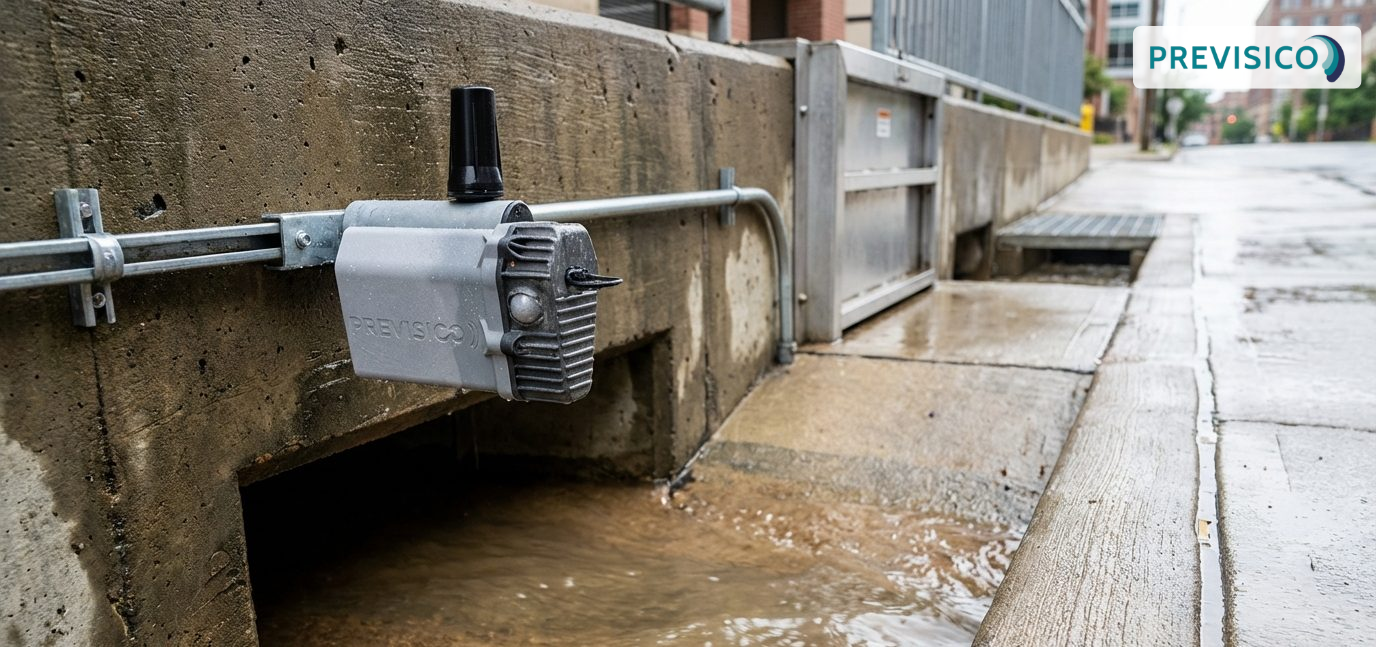
Integrate on-site, state-of-the-art, and connected hydrological sensors for real time monitoring. Previsico’s flood monitoring systems reliably measure water levels and velocity patterns to deliver accurate diagnostics. Review real time data & flood risk insights live – eliminating guesswork around measurements and notifications. Orange Flood Control perform precise measurement, site verification and conditions for turnkey, easy-fit installation.These on-site devices are designed to identify rapid-onset hazards above or below ground:

Prioritize data-driven prediction and risk insights for flood mitigation project planning. Timely data is automatically distributed once critical risk parameter thresholds are exceeded. Turnkey flood protection companies simplify communication, coordination, customization, and community planning throughout the end-to-end process. Gain awareness, build resilience, and strengthen flood control infrastructure – even for unmanned or remote facilities. Risk insights may incorporate environmental data from the National Weather Service (NWS), National Oceanic and Atmospheric Administration (NOAA), US Geological Survey (USGS), satellite transmissions, as well as local stations. Install innovative flood warning systems for prediction and long-term monitoring.
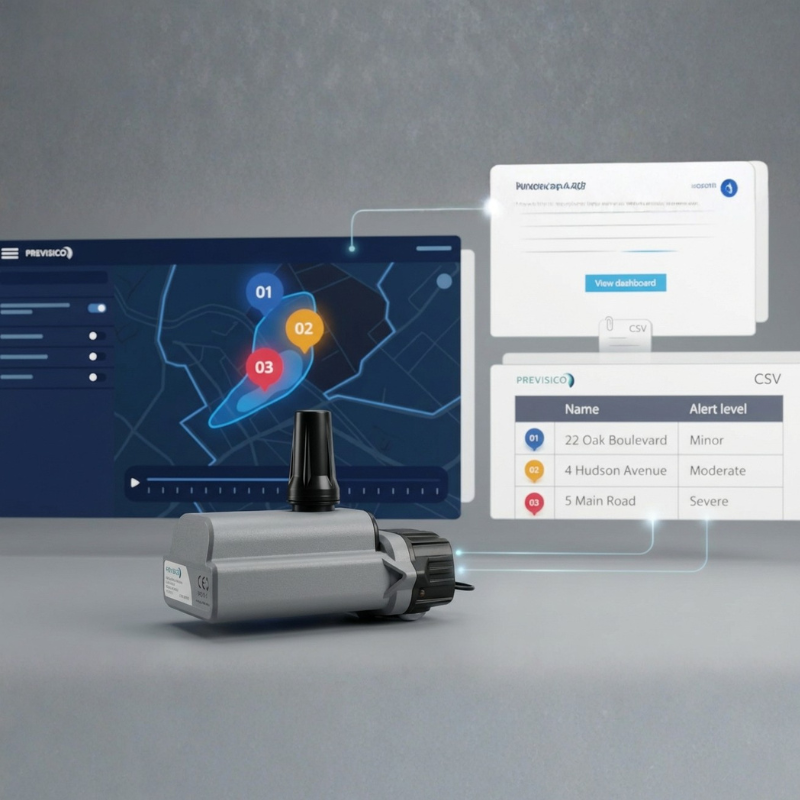
Compare industry applications for advanced flood warning systems. Monitoring solutions drive resilience, mitigate water risks, and accelerate proactive emergency response across operations. Throughout versatile use cases, sensor technology provides access to data – including advanced warnings, drainage infiltration, and overland flow pathways.
Across the US, systems are continuously protecting unique industries from rapid flooding, heavy rain, and storm events. Complete systems have been designed, built, and tested for:
Collaborate with dedicated, solution-driven mitigation project experts to carefully select installation & monitoring locations. These critical decisions depend on site conditions, waterway locations, and vulnerable openings. Technicians ensure sensors, data loggers, and telemetry equipment is strategically placed above high water surfaces – above where previous or existing flood inundation has occurred. After placement is planned, select a monitoring location based on physical location, access requirements, and safety requirements. Collaborate to understand mitigation techniques and requirements when making crucial site selections. This way, you can design strategic response plans to transmit insights regarding heavy precipitation and water levels.
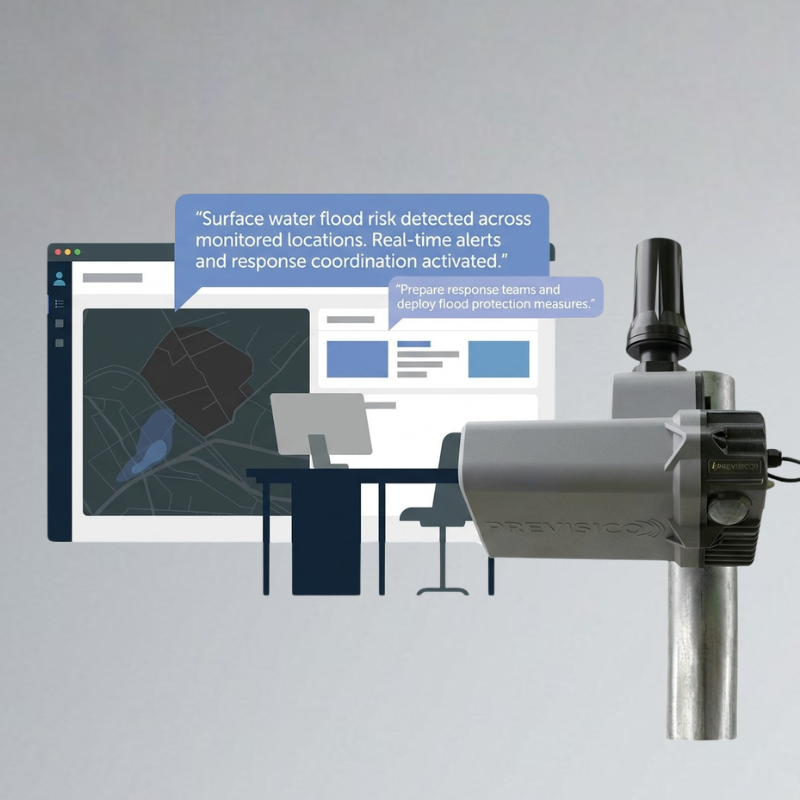
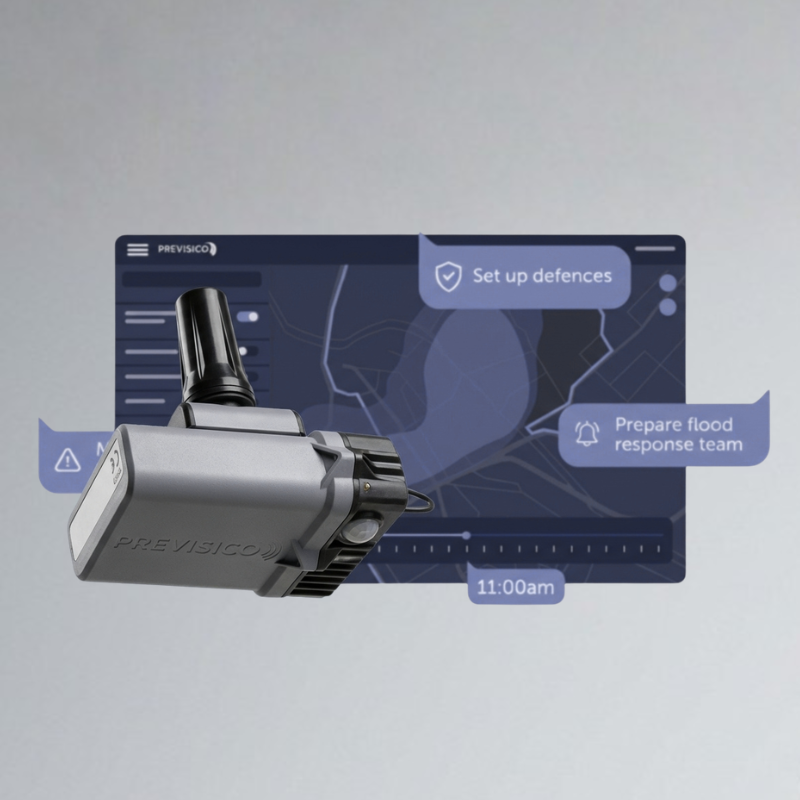
Alerts are delivered through dedicated platform. A secure web-based dashboard with interactive map provides clear visualization of flood depth, timing, and duration at the asset-level enabling informed, real time mitigation decisions.
With up to 48 hours of advance notice, the system enables the implementation of predefined flood response actions—including securing access points, deploying temporary barriers, relocating inventory, and isolating critical systems—reducing potential commercial flood losses.
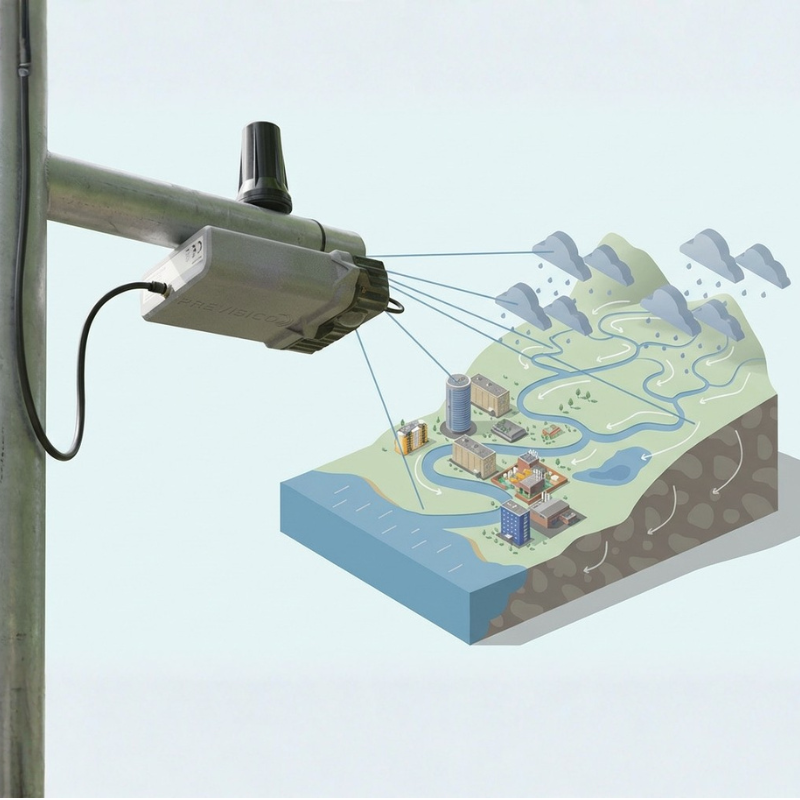
The advanced system integrates rainfall forecast locally from real-time IoT sensors(both above and below ground), topography & land-cover information, and detailed drainage data to generate updated flood risk assessment.
Orange Flood Control
We firmly believe that the internet should be available and accessible to anyone, and are committed to providing a website that is accessible to the widest possible audience, regardless of circumstance and ability.
To fulfill this, we aim to adhere as strictly as possible to the World Wide Web Consortium’s (W3C) Web Content Accessibility Guidelines 2.1 (WCAG 2.1) at the AA level. These guidelines explain how to make web content accessible to people with a wide array of disabilities. Complying with those guidelines helps us ensure that the website is accessible to all people: blind people, people with motor impairments, visual impairment, cognitive disabilities, and more.
This website utilizes various technologies that are meant to make it as accessible as possible at all times. We utilize an accessibility interface that allows persons with specific disabilities to adjust the website’s UI (user interface) and design it to their personal needs.
Additionally, the website utilizes an AI-based application that runs in the background and optimizes its accessibility level constantly. This application remediates the website’s HTML, adapts Its functionality and behavior for screen-readers used by the blind users, and for keyboard functions used by individuals with motor impairments.
If you’ve found a malfunction or have ideas for improvement, we’ll be happy to hear from you. You can reach out to the website’s operators by using the following email sales@orangefloodcontrol.com
Our website implements the ARIA attributes (Accessible Rich Internet Applications) technique, alongside various different behavioral changes, to ensure blind users visiting with screen-readers are able to read, comprehend, and enjoy the website’s functions. As soon as a user with a screen-reader enters your site, they immediately receive a prompt to enter the Screen-Reader Profile so they can browse and operate your site effectively. Here’s how our website covers some of the most important screen-reader requirements, alongside console screenshots of code examples:
Screen-reader optimization: we run a background process that learns the website’s components from top to bottom, to ensure ongoing compliance even when updating the website. In this process, we provide screen-readers with meaningful data using the ARIA set of attributes. For example, we provide accurate form labels; descriptions for actionable icons (social media icons, search icons, cart icons, etc.); validation guidance for form inputs; element roles such as buttons, menus, modal dialogues (popups), and others. Additionally, the background process scans all the website’s images and provides an accurate and meaningful image-object-recognition-based description as an ALT (alternate text) tag for images that are not described. It will also extract texts that are embedded within the image, using an OCR (optical character recognition) technology. To turn on screen-reader adjustments at any time, users need only to press the Alt+1 keyboard combination. Screen-reader users also get automatic announcements to turn the Screen-reader mode on as soon as they enter the website.
These adjustments are compatible with all popular screen readers, including JAWS and NVDA.
Keyboard navigation optimization: The background process also adjusts the website’s HTML, and adds various behaviors using JavaScript code to make the website operable by the keyboard. This includes the ability to navigate the website using the Tab and Shift+Tab keys, operate dropdowns with the arrow keys, close them with Esc, trigger buttons and links using the Enter key, navigate between radio and checkbox elements using the arrow keys, and fill them in with the Spacebar or Enter key.Additionally, keyboard users will find quick-navigation and content-skip menus, available at any time by clicking Alt+1, or as the first elements of the site while navigating with the keyboard. The background process also handles triggered popups by moving the keyboard focus towards them as soon as they appear, and not allow the focus drift outside it.
Users can also use shortcuts such as “M” (menus), “H” (headings), “F” (forms), “B” (buttons), and “G” (graphics) to jump to specific elements.
We aim to support the widest array of browsers and assistive technologies as possible, so our users can choose the best fitting tools for them, with as few limitations as possible. Therefore, we have worked very hard to be able to support all major systems that comprise over 95% of the user market share including Google Chrome, Mozilla Firefox, Apple Safari, Opera and Microsoft Edge, JAWS and NVDA (screen readers).
Despite our very best efforts to allow anybody to adjust the website to their needs. There may still be pages or sections that are not fully accessible, are in the process of becoming accessible, or are lacking an adequate technological solution to make them accessible. Still, we are continually improving our accessibility, adding, updating and improving its options and features, and developing and adopting new technologies. All this is meant to reach the optimal level of accessibility, following technological advancements. For any assistance, please reach out to sales@orangefloodcontrol.com