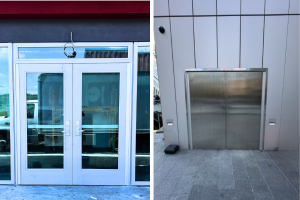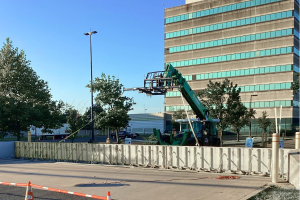

Understand the end-to-end flood barrier inspection process for doors, gates, planks, and resilient protection devices. These detail-oriented services test, validate, and benchmark the watertight systems that defend against flash/urban flooding, heavy rainfall, hurricanes, and tropical storms. Solution-driven inspections are tailored to unique active, temporary, point-of-use, and passive flood barrier requirements. As a building owner, take a proactive approach to ensure your storm control systems are reliable, resilient, and ready. Specific procedures are aligned with your building’s codes, location, and operational requirements – following a general schedule that includes:
- Visual Inspection
- Check Gaskets, Frame, Seals
- Performance Testing
- Hose Test & Chalk Test
- Hydrostatic Pressure Test
- Post-Inspection Services
Read on to learn about the flood proof door, gate, plank, and device inspection process.
Clean, Clear, & Repair Flood Protection Systems
After a brief visual inspection, technicians focus on cleaning, clearing, and repairing flood device solutions. Over time, debris, dirt, dust, mud, water, and leaves can get clogged within your system – impacting performance & reliability. Gaskets, joints, and seals can additionally degrade after repetitive use & constant outdoor exposure. Inspections are essential to correct signs of rust, corrosion, missing components, or failure. These services can be customized for:
- Removable, Modular, Reusable Barriers
- Permanent Or Built-In Systems
- Wet & Dry Floodproofing Equipment
- Backwater Valve Systems
If several vulnerabilities are detected, develop a facility-specific, client-customized maintenance schedule to maximize your flood prevention investment.
Verify Compliance With Industry, Local, & Nationwide Requirements
Ensure uninterrupted building code & industry compliance with specialized flood device inspections. There are specific regulations that address building materials, construction, maintenance, and testing for resilient infrastructure. To remain compliant & eligible, inspection professionals can review requirements established by:
- ANSI/FM 2510 Approval Standards
- FM Approvals Building Requirements
- Build America, Buy American (BABA) Standards
- FEMA Compliant Requirements
- Floodplain Management Services (FPMS)
- ASCE 24-24 Resistant Design
- State Programs
- LEED Certified Building Plans
- US Army Corps Of Engineers (USACE)
Promote uninterrupted compliance by committing to proactive testing, personnel training, and flood control maintenance. Flood gate inspection companies verify compliance with local, nationwide, and industry-specific resilience requirements.
Prioritize Floodplain Support To Keep Products Plumb, Level, & Square
The flood gate inspection process involves strategic floodplain support to keep systems plumb, level, square, and resilient. Professional mitigation services may involve annual personnel training, lunch & learn opportunities, compliance/code reviews, and emergency management consulting.
What is checked, verified, and validated during your initial inspection?
- Critical Flood Barrier Components
- Large-Scale Infrastructure Resilience
- Overall Structural Integrity
- Proactive Problem Detection
- Proper Function & Performance
Teams are committed to your corporation’s operational resilience, reliability, and continuity. After the initial install, you should feel confident, informed, and empowered at all times. Keep your systems plumb, level, and square – with the latest regulations & codes in-mind.
Perform Gasket & Chalk Testing Inspections
Your flood mitigation device inspection may also involve comprehensive fit & chalk testing services. Technicians add chalk over the sealing surface – then slowly deploy, tighten, and latch the barrier. The chalk should ultimately be transferred directly to the gasket – validating the seal as continuous, dependable, and watertight. Depending on your facility’s requirements and risk tolerance, additional hose, coffer dam, and hydrostatic pressure inspections may also be recommended.
How the chalk test works:
- Pre-Test Preparation: Clean & Prepare The Sealing Surface
- Chalk Application: Apply A Large Piece Of Sidewalk Chalk
- Device Engagement: Close, Deploy, & Latch The Barrier
- Gasket Inspection: Check The Rubber Gasket For An Unbroken, Complete Chalk Line
- Interpret The Results: Gaps or Line Breaks Indicate Vulnerabilities In Compression
Speak with United States infrastructure protection companies for more information, insights, and specifications for the full inspection process.
Review Inspection & Field Testing Documentation
After a passed flood door inspection, review documentation & reports with key stakeholders. Documentation highlights your system’s expected performance against hydrostatic pressure, high winds, debris impacts, and other real-world storm conditions. A comprehensive range of insights, findings, and key performance indicators (KPIs) are enclosed. Inspection reports may recommend an ongoing schedule for annual device maintenance and personnel training. To ensure reliable performance, immediate custom repairs or barrier replacement services may also be necessary.
Fully-understand the process, requirements, and procedures to fully-prepare for your next flood control inspection. Technicians take time to evaluate critical systems, verify compliance, and recommend proactive repairs. Hydrostatic pressure, gasket, and chalk testing inspections may additionally be advised.
Here’s a couple frequently asked questions (FAQs) to keep in-mind before you get started:
- Why are inspections important?
- What is a 500-year floodplain?
- Who should I call for a professional inspection?
- How to request a version of my flood map?
- How to validate system integrity?
- Is annual maintenance required?
- What is the necessary inspection frequency?
Follow the points above to learn about watertight barrier inspection requirements for United States infrastructure.